Rail-to-lift ski towns of Europe
Fourteen European bases where the railway does real work in the ski day — stations that are lift bases, railways that are the lift system, and mainline arrivals a local network finishes.
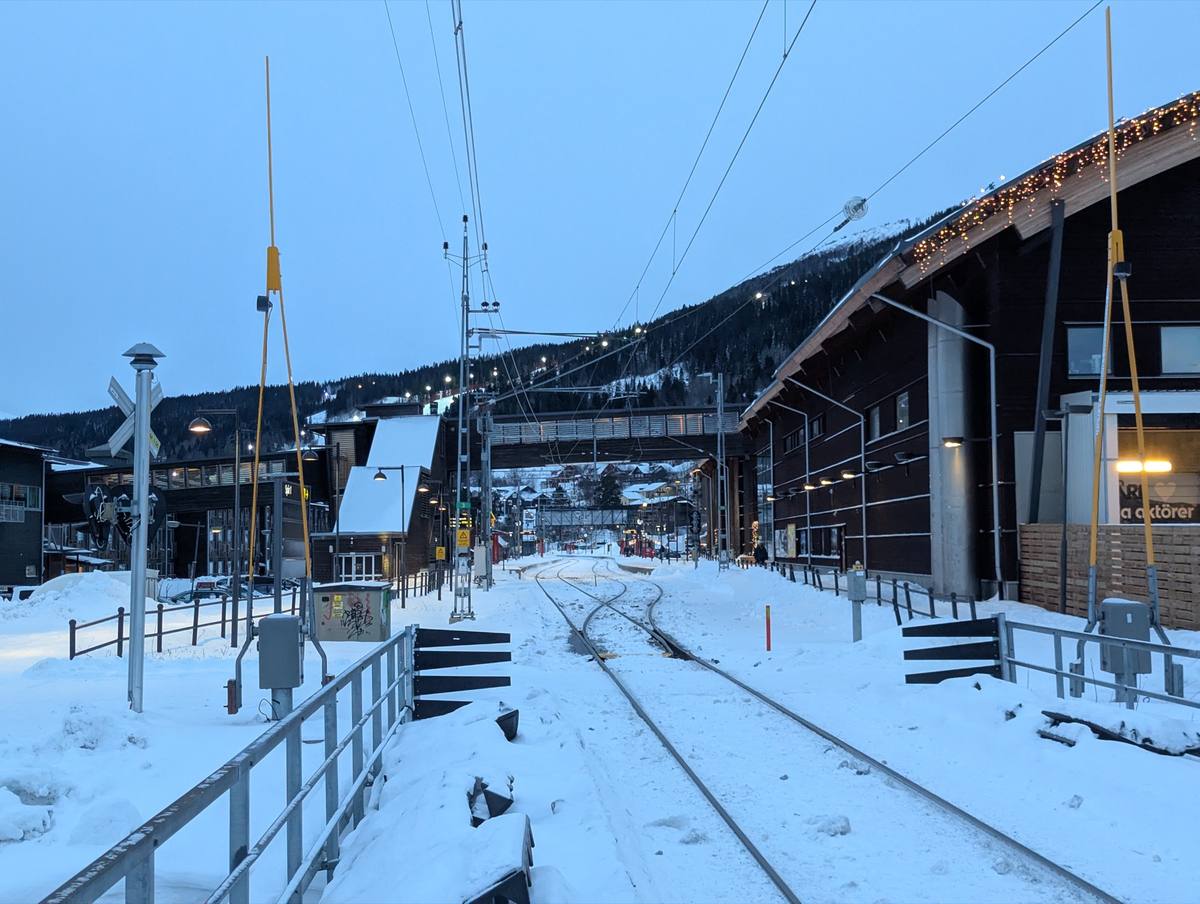
At a glance
| Base | Where | Car-free reach | Evenings | Car |
|---|---|---|---|---|
| Andermatt | Switzerland | 6 of 6 areas | Limited | |
| The Jungfrau Region: Wengen, Mürren, Grindelwald & Lauterbrunnen | Switzerland | 10 of 10 areas | Good | |
| Davos & Klosters | Switzerland | 10 of 10 areas | Limited | |
| Aletsch Arena: Riederalp, Bettmeralp & Fiescheralp | Switzerland | 4 of 4 areas | Limited | |
| Kitzbühel | Austria | 5 of 5 areas | Limited | |
| Bad Gastein | Austria | 6 of 6 areas | Limited | |
| Bourg-Saint-Maurice & the Tarentaise | France | 10 of 11 areas | Limited | |
| Voss | Norway | 1 of 3 areas | Not assessed | |
| St. Anton & the Arlberg | Austria | 7 of 8 areas | Limited | |
| Briançon | France | 4 of 6 areas | Limited | |
| Åre & Duved | Sweden | 4 of 5 areas | Limited | |
| Zell am See | Austria | 4 of 4 areas | Limited | |
| Engelberg | Switzerland | 3 of 3 areas | Limited | |
| Innsbruck as a Ski Base | Austria | 10 of 10 areas | Limited |
In Europe a ski trip can run on a railway timetable from the front door to the last lift, and the bases below cover the full range of what that means. Each is a published destination page whose own verified access data gives the railway a working role — and the role differs enough to be worth choosing deliberately. On some pages the train is the lift system, with mountain stations that double as lift bases. On others the platform and the gondola share a building, so the journey ends at the snow. On the rest, a mainline delivers you to the town’s own station and a documented bus, shuttle or funicular finishes the job. The three groups below follow those roles; every minute quoted is maintained on the linked page with its operator sources and verification dates.
Where the railway is the lift system
Andermatt is the purest case on this site. The Gütsch-Express gondola leaves from the railway station itself, and the Matterhorn Gotthard Bahn then keeps going into the ski area — Nätschen, Oberalppass and Dieni are, in the operator’s own words, valley stations of named lifts, the full-area ski pass includes the trains, and the rental shop waits in the station underpass. Three of its six matrix rows are train rows and all six are transit-served. The trade is the railway’s clock: hourly departures, and a last crossing of the Oberalp at 19:38.
The Jungfrau Region is the flagship-scale version. Wengen and Mürren have no road because nobody ever built one, so the Wengernalpbahn cog railway is the primary lift — 22 minutes from Wengen station to Kleine Scheidegg under the Eiger — and seven of the ten matrix rows are train rows, every one of them transit-served. Its page says it plainly: a railway used as the lift system, part of the landscape and part of the ticket.
Davos–Klosters wraps four railway stations around six separate mountains, and six of its ten rows are train rows: the Rhaetian Railway to Davos Dorf for the Parsennbahn, to Davos Glaris where the Rinerhorn gondola waits across the road, to Klosters Dorf where the Madrisabahn stands about fifty metres from the platform, and onward to Bergün, St. Moritz and Arosa for day trips. The accommodation card covers second-class rail within the local fare zones — enough, from a Davos bed, to reach Parsenn and Rinerhorn without buying anything.
The Aletsch Arena runs the idea vertically. No road reaches Riederalp, Bettmeralp or Fiescheralp — each village sits at the top of its own cable car, and the Matterhorn Gotthard Bahn’s valley line is what strings the three bases together: ten minutes from Brig to Mörel, sixteen to Bettmeralp Talstation, thirty-two to Fiesch, with the Goms cross-country valley a train row beyond. The page’s central finding is the evening asymmetry — Riederalp’s last car past 22:00 nightly, Fiescheralp’s at 21:35, Bettmeralp’s at 17:50 midweek — and its caution that the railway guarantees no timed connection to the cable cars, so slack belongs in the plan.
Kitzbühel keeps three stations working — the Hauptbahnhof, a halt directly at the Hahnenkamm gondola, and Schwarzsee — and uses the railway to multiply its skiing: direct trains reach a second linked network at Brixen im Thale in ten to eleven minutes and a third at St. Johann in Tirol in about fifteen, with all five rows on published transit. The seams are documented with the same care: the two home sectors are not lift-connected, the ski trains run free only in ski gear between 7:50am and 6pm, and free rail belongs to a neighboring valley’s guest card rather than the town’s own.
Where the platform meets the lift base
Bad Gastein owns the cleanest arrival in the Alps: a covered overpass runs from the platform straight to the Stubnerkogel gondola — an architectural connection, not a street crossing — and a direct long-distance train arrives on the hour, every hour. The legislated Guest Mobility Ticket then puts all six matrix rows on free transit, the valley’s one toll road included, and its page rates a car flatly unnecessary.
Bourg-Saint-Maurice is the terminus version: direct winter TGV and OUIGO from Paris, and the Arc-en-Ciel funicular starting inside the railway station — over the footbridge and seven published minutes up to Arc 1600 and the 425 km Paradiski domain, with the ride up free on arrival day for anyone showing a valid train ticket. The rails keep working after arrival, too: four more rows begin with a train, to Landry for Peisey’s nordic domain and through Moûtiers for the Trois Vallées, and ten of the eleven rows ride on published transit.
Voss carries the geometry beyond the Alps. Voss Gondol’s base stands directly beside the platform at Voss stasjon on the Bergen Line — off the train and onto a lift with no shuttle and barely a walk, about ninety minutes from boarding in Bergen to standing at Hangurstoppen on the resort’s own figure. Its page is equally plain that this is the one exceptional transfer: the valley’s second mountain and the nordic arena currently model as drives, so the railway carries the trip’s headline and a car carries its margins.
Where the train delivers and a local network finishes
St. Anton am Arlberg is a village built around a railway station: long-distance Railjet and EuroCity trains stop in the centre, the Galzigbahn is five to ten minutes on foot from central beds, and a single bus line, the 760, runs the corridor to St. Christoph, Stuben, Zürs and Lech with no transfer. Seven of eight rows are transit-served; the eighth, Warth-Schröcken, is reached on skis while the lifts run.
Briançon pairs a direct night train from Paris Austerlitz to the town’s own station with a daytime TGV-and-coach route via Oulx that does Paris to Briançon in under six hours. The Prorel gondola climbs out of the lower town into the linked Serre Chevalier domain, an estimated ten minutes’ walk from central lodging, and the AltiGo network runs from the station forecourt — Montgenèvre in a published forty minutes. Its page prices the system honestly: the valley buses are paid rather than free, and four of the six rows ride on transit.
Åre is the only major Northern European ski destination reachable overnight by sleeper from a national capital to a station inside the village, and SJ’s daily express now runs alongside it — Stockholm at 16:50, Åre by 23:21. A dedicated shuttle bridges the station to the Kabinbanan, and the ski-bus network, free with a valid SkiPass, carries the valley’s two lift systems. Its page flags the watch item squarely: SJ itself calls the sleeper’s continuation past 2026 hoped-for rather than secured.
Zell am See arrives by direct regional train from Salzburg in about an hour and forty minutes, walks from the lakefront to a gondola that starts inside town, and rides the 660 bus to Kaprun’s glacier every fifteen minutes at midday in season. The rail keeps working after dinner: the Pinzgauer Lokalbahn narrow-gauge runs the same corridor to a 22:02 last departure — later than any ski shuttle — and the legislated Guest Mobility Ticket covers it by name.
Engelberg ends the Zentralbahn’s hourly express beside a working Benedictine monastery, 43 minutes from Lucerne, and from the platform the Titlis valley station is an 800-metre walk or a free three-minute bus. All three of its rows sit on the same free village network and its page rates a car unnecessary, with the honest note that the bus makes its last Titlis run at 17:30 and village walking distances carry the evening.
Innsbruck runs the deepest roster in this guide from one forecourt: arriving by train puts you within a few hundred metres of every ski bus in the matrix — ten lift-served areas on published schedules out of the Hauptbahnhof — with the Hungerburgbahn funicular leaving from the edge of the old town every fifteen minutes. The system’s shape is one morning departure per valley and a return by late afternoon: a timetable that decides the ski day, and a university city that fills the evening after it.
Considered and excluded
- Aosta — the Pila gondola's base is a short pedestrian underpass from the railway station, exactly this guide's geometry, but its page documents the Aosta–Ivrea line closed for electrification since January 2024, with the region's own plan returning trains to Aosta only by spring 2027. Until then arrival is by pre-booked coach, so Aosta waits for the reopening rather than appearing here.