The Jungfrau Region: Wengen, Mürren, Grindelwald & Lauterbrunnen
The only major ski region in the Alps where two of the principal villages have no road at all — Wengen and Mürren are car-free because nobody ever built one, which makes this the rare place where car-free is a fact of terrain rather than a parking policy.
Car-free arrival is practical, daily needs are walkable or transit-served, and at least 80% of the ski areas in this page’s matrix are reachable on published transit during normal ski hours. Verified August 16, 2026.
At a glance
- Ski areas
- 10
- Within 30 min
- 2
- Closest
- 12 minCable car
- Reachable by transit
- 10 of 10
- Arriving from
- Zurich Airport3h 10m by train
- Groceries on foot
- YesYear-round town
The verdict
Verdict
Come here if car-free travel matters most. Wengen and Mürren are not restricted-access villages. There is no road, and there never was one. What other resorts sell as a shuttle scheme is simply how this valley works. You arrive by rack railway, you walk everywhere, and the Wengernalpbahn puts you at Kleine Scheidegg under the Eiger north face for the best-looking intermediate mileage in Europe. For a week of long cruising pistes and evenings in a village with no traffic noise, nothing in the Alps does it this completely.
Do not come for steep skiing. This is a cruising region with a handful of genuinely hard pitches and thin lift-served off-piste; Chamonix or Engelberg will bury it. Do not come on a budget — Swiss prices plus a railway for a lift system is the most expensive combination in the Alps. And do not assume one region means one mountain. Wengen to Mürren is the better part of an hour, and Grindelwald-First is most of a morning.
Is this base for you?
Who this suits
Best for
- Travelers who actively do not want a car. Wengen and Murren have no road access, and trains, cableways and walking form the ordinary connection from bed to mountain.
- Confident intermediates. Kleine Scheidegg and Mannlichen provide sustained sunny cruising beneath the Eiger, with the Lauberhorn descent reached from Wengen by cog railway.
- Parties with non-skiers. The Jungfraujoch railway, sledging from Mannlichen and First, and traffic-free village paths provide reasons to travel without buying an alpine pass.
Depends on you
- Roadless Wengen and Murren. They deliver quiet streets and no traffic noise, while every arrival, supermarket run and mountain transfer remains tied to the railway timetable.
- Four distinct bases. Wengen, Murren, Lauterbrunnen and Grindelwald let you choose sun, snow, lower prices or more services, but they do not function as one walkable town.
- A railway used as the lift system. The journey is part of the landscape and the car-free appeal, and also part of the Swiss-priced ticket and the time needed to change sectors.
The honest part
Things you should know
- 01
The cost is structural, not incidental. Your lift system is a rack railway and three cableway companies, all of which are expensive to run and priced accordingly, and in a car-free village there is no cheap supermarket run, no bargain out-of-town hotel and no way to cut the transport line out of the budget. Swiss prices plus railway prices is the dearest combination in the Alps.
- 02
One ski pass does not mean one mountain. Wengen and Mürren face each other across four kilometers of the Lauterbrunnen valley and are the better part of an hour apart by train and cable car, with no direct link. Grindelwald-First is eighty minutes from a Wengen bed. Plan to ski one sector per day rather than roaming, and read any marketing that totals the region's piste kilometers with that in mind.
- 03
Car-free is also fragile. When the Wengen–Männlichen cableway or the Schilthornbahn goes on a wind hold, or the Grütschalp cable car stops for weather or maintenance, there is no road to fall back on — you wait, or you take a much longer rail detour. The Lauterbrunnen valley floor also loses direct sun for weeks in midwinter, which surprises people who booked the postcard.
The access matrix
What you can ski from the Jungfrau Region
Typical door-to-lift times in normal winter conditions. ● marks areas reachable on published transit during ski hours. Every row is dated below.
- On foot or skis
- Public transport
- Lift from town
- Needs a vehicle
| Ski area | Getting there | Time | Best for | Main drawback |
|---|---|---|---|---|
| Transit-served. Männlichen | Cable carLWM cableway · every 15 min · last descent 16:30 early season, 17:00 from late JanuaryEvidence & assumptions for MännlichenAbout five minutes on foot from most of Wengen to the LWM base station, then a ride the operator puts at just under five minutes. Winter departures every 15 minutes; last descent 16:30 in the early season, 17:00 from late January. Source [6] Winter timetable — Wengen–Männlichen aerial cableway and Grindelwald–Männlichen gondola — verified August 20, 2026 | [6] | Long sunny cruising and the fastest start from a Wengen bed | An exposed cableway that shuts in high wind, with no road alternative when it does |
| Transit-served. Lauterbrunnen valley loipe | TrainWengernalpbahn down to Lauterbrunnen, then walk to the Eyelti trailhead · estimatedEvidence & assumptions for Lauterbrunnen valley loipeEstimated. Wengernalpbahn down to Lauterbrunnen (14 min) plus the walk to the Sportanlage Eyelti trailhead. Classic and skating, running down-valley toward Stechelberg. Source [1] Wengernalpbahn AG — company and route profile — verified August 16, 2026 | [1] | Flat valley-floor cross-country between the waterfalls | Low and deeply shaded, so it is the first snow in the valley to go |
| Transit-served. Kleine Scheidegg | TrainWengernalpbahn cog railway from Wengen station · 22-min ride upEvidence & assumptions for Kleine ScheideggFive minutes to Wengen station plus a 22-minute Wengernalpbahn ride. You can be on snow sooner by getting off at Allmend or Wengernalp, but the linked terrain starts at the top. Source [1] Wengernalpbahn AG — company and route profile — verified August 16, 2026 | [1] | The Lauberhorn, the Eiger north face and the region's best intermediate mileage | Half an hour of cog railway each way, and the trains fill from the Grindelwald side |
| Transit-served. Schilthorn–Mürren | TrainThree legs via Lauterbrunnen and Grütschalp · two transfers · time estimatedEvidence & assumptions for Schilthorn–MürrenEstimated from published segment times, not a single published door-to-door figure. Wengen down to Lauterbrunnen 14 min, Lauterbrunnen–Grütschalp cable car 4 min, Grütschalp–Mürren train 12 min, plus two transfers and the walk through Mürren. Source [2] Bergbahn Lauterbrunnen–Mürren AG — company and technical profile — verified August 16, 2026 | [2] | The highest and quietest snow in the region, plus the Inferno descent | Close to an hour each way despite Mürren sitting four kilometers from Wengen |
| Transit-served. Grindelwald-Grund loipe | TrainTrain to Grindelwald Grund, ~10-min walk · free with the guest card most seasonsEvidence & assumptions for Grindelwald-Grund loipeEstimated. Alight at Grindelwald Grund; the trailhead is about ten minutes on foot from there. Free with the local guest card in most seasons. Source [1] Wengernalpbahn AG — company and route profile — verified August 16, 2026 | [1] | A real network — roughly 9 km classic and 10.5 km skating under the Eiger | Over an hour each way from Wengen for terrain you can cover in a morning |
| Transit-served. Grindelwald-First | TrainRail via Lauterbrunnen (BOB ~39 min), then bus or walk · or ski over via Kleine ScheideggEvidence & assumptions for Grindelwald-FirstEstimated. Wengen down to Lauterbrunnen, BOB on to Grindelwald (about 39 min), then bus or a ten-minute walk to the Firstbahn. Most Wengen skiers ski over via Kleine Scheidegg instead. Source [3] National timetable and journey planner — verified August 16, 2026 | [3] | Sunny south-facing slopes, the freestyle terrain and the best beginner progression | A full valley circuit from Wengen, and the first sector to go slushy in spring |
| Transit-served. Meiringen-Hasliberg | TrainRail via Interlaken Ost and the Brünig line · Reuti cableway near the station · separate passEvidence & assumptions for Meiringen-HaslibergEstimated. Wengen to Interlaken Ost, Brünig line to Meiringen, then the Reuti cableway from near the station. On a separate pass from the Jungfrau Ski Region. Source [3] National timetable and journey planner — verified August 16, 2026 | [3] | The largest separate ski area within a day's reach, and better spring snow at Planplatten | Nearly two hours each way, so it only works as an all-day commitment |
| Transit-served. Axalp ob Brienz | Public busRail to Brienz, then PostBus 155 up · ~35-min bus leg · time estimatedEvidence & assumptions for Axalp ob BrienzEstimated. Wengen to Interlaken Ost, Brünig line to Brienz, then PostBus route 155 for about 35 minutes up to Axalp. One chairlift and a few surface lifts. Source [3] National timetable and journey planner — verified August 16, 2026 | [3] | A small, cheap family day well away from the Jungfrau crowds | PostBus 155 up from Brienz runs a handful of times a day — miss one and the day collapses |
| Transit-served. Kandersteg cross-country | TrainRail via Interlaken Ost and Spiez · hourly most of the day · trailhead a 10-min walkEvidence & assumptions for Kandersteg cross-countryEstimated. Via Interlaken Ost and Spiez, hourly for most of the day. The trailhead is about ten minutes on foot from Kandersteg station. Source [3] National timetable and journey planner — verified August 16, 2026 | [3] | Serious nordic mileage — among the largest loipe networks in the Bernese Oberland | Two hours each way, and the Sunnbüel section is only tracked from roughly Christmas to Easter |
| Transit-served. Adelboden-Lenk | Public busRail to Frutigen, then PostBus 230 · buses half-hourly · the rail legs govern the dayEvidence & assumptions for Adelboden-LenkEstimated. Rail to Frutigen via Interlaken Ost and Spiez, then PostBus route 230 for about 30 minutes into Adelboden. Half-hourly buses, but the rail legs govern the day. Source [3] National timetable and journey planner — verified August 16, 2026 | [3] | A genuinely large linked area once the Jungfrau pistes start repeating | Two and a half hours each way and a wholly separate lift pass, so it rarely repays the effort |
Where to stay
This is the richest base choice in the Alps, and the five options are genuinely different trips.
Wengen: the car-free default
Wengen is the answer for most people who came here for the car-free idea. It sits on a sunny shelf 500 meters above the valley floor, it has a Coop, a handful of bars that stay open midweek in March, and two ski accesses — the Wengernalpbahn to Kleine Scheidegg and the cableway to Männlichen — both within five minutes’ walk of almost any bed. The Lauberhorn finishes just outside the village. It is also expensive, and in January the shelf gets its sun back hours before Lauterbrunnen does, which is reflected in the rates.
Mürren: highest, quietest, hardest to reach
Mürren is the purest version of the same idea and the hardest to get to. Highest of the villages at 1,638 m, smallest, quietest, with the best snow retention and the Schilthorn above it. Everything else in the region becomes an hour away. Come here if you want one mountain and no distractions.
Lauterbrunnen: the valley-floor transit hub
Lauterbrunnen is the valley floor and the transit hub. There is no skiing in the town at all — what there is instead is the car park where you leave the car, the station where all four lines meet, a supermarket, and considerably lower prices than the villages above. It is the pragmatic family base and the correct base if you are driving in from elsewhere in Europe. The tradeoff is that you commute up every morning and that the valley floor is in shadow for much of midwinter.
Grindelwald: the biggest, and the only drive-to base
Grindelwald is the biggest, has the most terrain on its doorstep and is the only base you can drive to. Since the Eiger Express and Grindelwald Terminal opened, it is also the busiest lift portal in the Bernese Oberland; on a weekend or a Swiss school holiday, the queues are the reason Wengen people stay on their own side.
Interlaken: cheapest, furthest from the lifts
Interlaken is the cheapest and the least ski-town-like. It is a lake town with a large hotel stock, real restaurants and 30-plus minutes of train each way to any lift. If your trip is half skiing and half something else, it is defensible. If you are skiing six days, it is an hour a day you will resent.
Getting there
Zurich Airport to Wengen is about three and a quarter hours on published rail schedules, usually with a change at Bern and always with a change at Interlaken Ost and again at Lauterbrunnen. From Geneva it is closer to three and a half. Interlaken Ost to Wengen is 37 minutes: BOB to Lauterbrunnen in about 20, then the Wengernalpbahn up in 14.
Mürren has two routes and both are worth knowing. The usual one is the Lauterbrunnen–Grütschalp cable car (four minutes) and then the cliff-edge railway along the terrace to Mürren (twelve). The other is the postbus up-valley to Stechelberg and the Schilthornbahn cableway, rebuilt and reopened in stages through 2024 and 2025, which now climbs to Mürren in a single section.
If you drive, you drive to Lauterbrunnen and stop. There is a multi-story car park under the station and a second lot by the church. Stechelberg has parking for the Mürren cableway. Nothing goes further; there is no gate, no permit, no exception — the road ends.
Getting around
The region is a railway, and it behaves like one: frequent, punctual, and rigid about where it goes. Trains between Lauterbrunnen and Wengen run from early morning until late at night, which is why evening transit here scores as well as it does — you can eat in Lauterbrunnen or Interlaken and get home. Mürren’s last connection is meaningfully earlier, and that asymmetry catches people out. Check it on arrival rather than assuming.
Every one of the ten areas in the matrix above is reachable on published scheduled service during ski hours, with a same-day return. That is not a rounding-up; it is what a hundred and thirty years of mountain railway building produces. A car buys you nothing here except the ability to sleep in Grindelwald and drive to Adelboden, and it costs you the Lauterbrunnen parking fee for the week.
What the transit network does not do is make the region compact. Times in the matrix are door-to-lift from a Wengen bed, and most of them are assembled from published segment times rather than a single published journey — where that is the case the row says so. Nothing here is a guess dressed as a measurement, but the transfer figures deserve re-checking against the live timetable before you build a week around them.
Who it suits
- Anyone who actively wants to not have a car. This is the strongest case for the destination and the reason it exists. Families with small children, people who do not drive, people who hate the alpine road experience — all of them get a version of a ski week here that is barely available anywhere else.
- Confident intermediates. The Kleine Scheidegg–Männlichen sector is enormous, sustained, beautifully graded cruising terrain with the best backdrop in skiing.
- Non-skiers in the party. The Jungfraujoch railway, the sledge runs off Männlichen and First, and the winter walking network mean a non-skier has a real week rather than a hotel lobby.
It suits experts worst. There is steep terrain — the Inferno course off the Schilthorn, the Lauberhorn itself, some of the north-facing lines under Männlichen — but the region does not have the lift-served off-piste that Chamonix, Engelberg or Andermatt do, and a strong skier will have seen it in three days.
Living for a season
The four villages support a real year-round population, which is unusual for high alpine settlements and means shoulder-season work exists. Grindelwald and Lauterbrunnen are proper municipalities with schools, a hospital at Interlaken forty minutes down the line, and an economy that runs hard in summer as well as winter.
Two constraints are severe. Housing in Lauterbrunnen and Grindelwald has been squeezed hard by short-term rental conversion and second-home ownership; long-term winter lets in Wengen and Mürren in particular are scarce and priced for tourists, and employer housing is often the only realistic route in. And Switzerland is not in the EU: non-Swiss, non-EU/EFTA nationals need a work permit arranged before arrival, and seasonal hospitality quotas are tight. Do not plan a season here on the assumption you can sort paperwork on the ground.
What the town is like
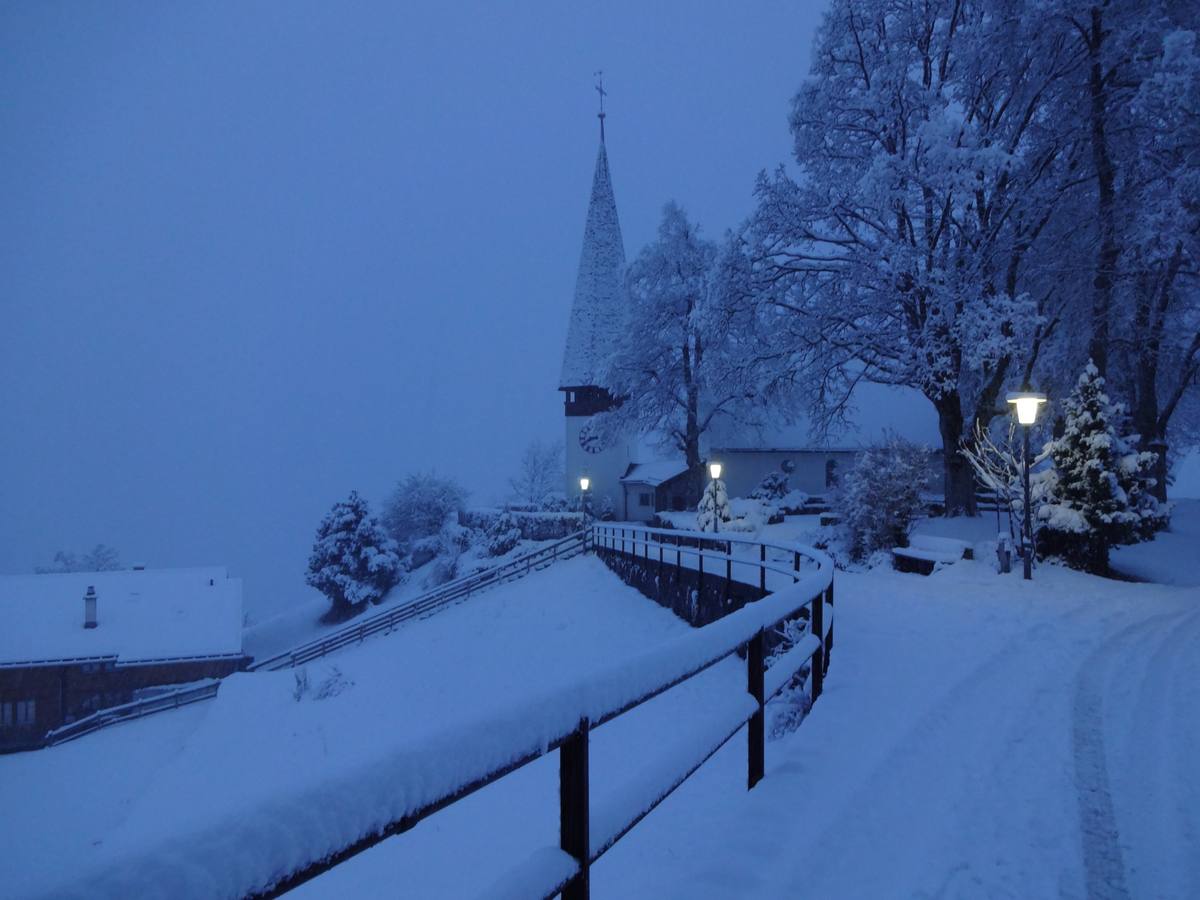
There are four towns and they do not agree with each other. Wengen is an Edwardian British invention — the Downhill Only Club has been racing the Lauberhorn out of here since the 1920s — and it still reads as a quiet terrace of hotels with prams and skis and no engines. Mürren is smaller, plainer and more Swiss, a working hamlet that happens to have a cable car to 2,970 m. Lauterbrunnen is a working valley village with 72 waterfalls, a campsite economy and a lot of through traffic in summer. Grindelwald is a resort town in the conventional sense, with the crowds and the retail to match.
The common thread is the Lauterbrunnen valley itself, which is the whole reason the geography works the way it does: 400 meters of vertical limestone on both sides, no room for a road up either flank, and so railways instead. That accident is what the site is actually recommending.
Sourcing note. Rail and cableway rows cite the registered Wengernalpbahn, Lauterbrunnen–Mürren and SBB national-timetable records; PostBus legs are carried by the national timetable, which is where the operator publishes them. The Wengen–Männlichen row cites the LWM winter timetable record verified 2026-08-20, and the transfer minutes still warrant re-checking against the live winter timetable each season.
Not sure?
Choose somewhere else if…
- Aletsch Arena
You want the car-free part for less money and fewer people. Riederalp, Bettmeralp and Fiescheralp are all road-free and cable-car served, the snow sits higher and drier, and the whole thing is quieter — but the terrain is a fraction of the Jungfrau's and there is no equivalent of the Lauberhorn or the Eiger wall.
- Chamonix
The skiing matters more than the logistics. Chamonix has the serious high-alpine and glacier terrain the Jungfrau Region simply does not, and a decent free valley bus — at the cost of a real road, real traffic and a valley that feels like a town rather than a village.
- Davos & Klosters
You want the same Swiss rail access with far more piste per franc and a place that functions as a working town year-round. You give up the car-free villages and the Eiger out of the window, and you get four separate mountains you can actually ski through in a week.
This base appears in
Sources & data notes
How this page was verified
Section verification
- Access matrixAugust 16, 2026
- Getting thereAugust 16, 2026
- Getting aroundAugust 16, 2026
- Where to stayAugust 16, 2026
Sources
- Wengernalpbahn AG — company and route profile — Jungfrau Railways (Jungfraubahn Holding AG) · official operator page, cited not reproduced · retrieved
- Bergbahn Lauterbrunnen–Mürren AG — company and technical profile — Jungfrau Railways (Jungfraubahn Holding AG) · official operator page, cited not reproduced · retrieved
- National timetable and journey planner — SBB — Schweizerische Bundesbahnen / Swiss Federal Railways · operator timetable, cited not reproduced · retrieved
- Getting to Wengen — arrival information — Wengen Tourism · official tourism office page, cited not reproduced · retrieved
- Getting to Mürren — arrival information — Mürren Tourism · official tourism office page, cited not reproduced · retrieved
- Winter timetable — Wengen–Männlichen aerial cableway and Grindelwald–Männlichen gondola — Luftseilbahn Wengen-Männlichen AG (LWM) · operator timetable, cited not reproduced · retrieved
- Northeast resort profiles — NESKIS · sibling property; mountain specifications maintained there · retrieved
Images
Page last reviewed August 16, 2026. Transit routes, schedules and fares change between seasons — check the operator before you travel. Mountain specifications for the northeastern US are maintained separately on NESKIS.