St. Anton & the Arlberg
A direct Railjet stop in the village and a single bus line that reaches St. Christoph, Stuben, Zürs and Lech with no transfer, set against a winter road to Warth-Schröcken that simply does not exist — reachable only by skiing the connected domain while the lifts are running.
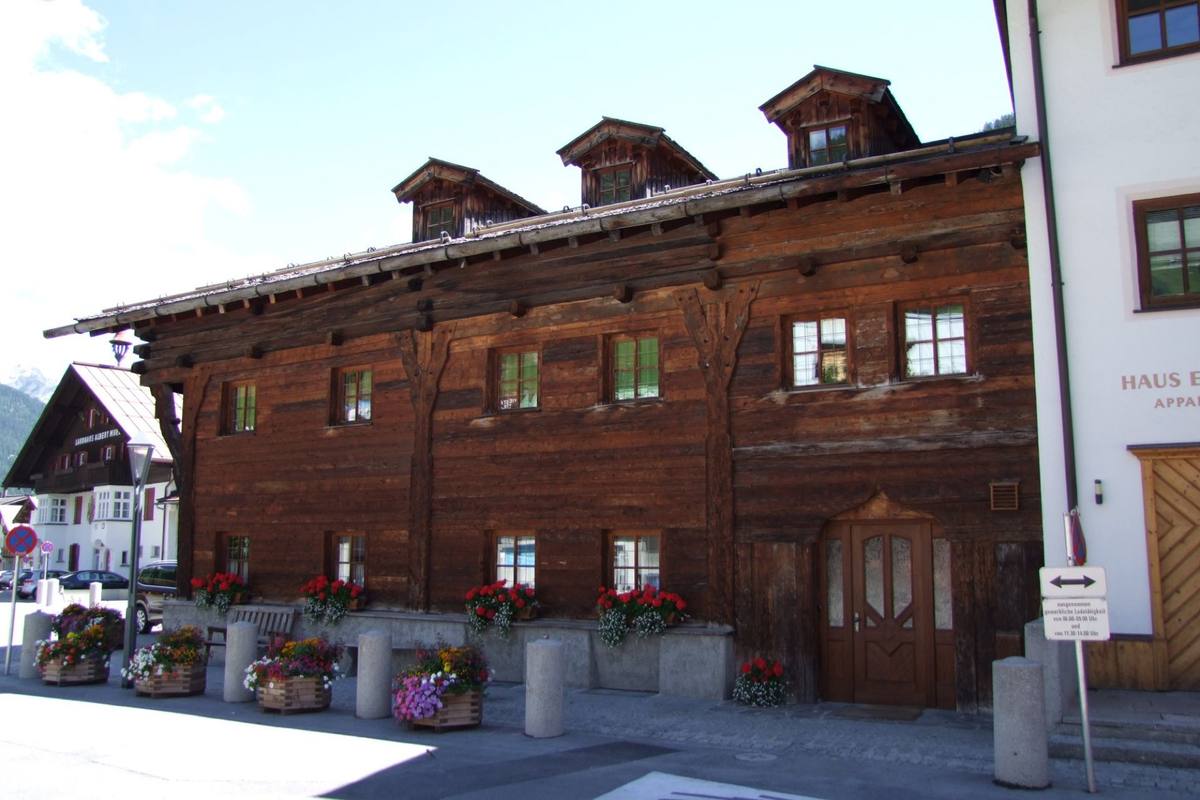
The core trip works without a car, but a car materially expands your lodging, evening or mountain choices. Verified August 18, 2026.
EveningsExact clock times for the regional Bus 760 were not extractable from the operator's published timetable during this research pass — the vmobil.at PDF timetables returned unreadable binary/OCR noise on fetch. What is confirmed: 760 runs roughly hourly in winter, and once its last run has gone there is no bus at all between St. Anton and Lech or Zürs. The only late-evening service, "James," runs 7:30pm to 2am but stays local to the Lech/Zürs/Oberlech/ Stubenbach/Zug cluster and does not reach St. Anton.
At a glance
- Ski areas
- 8
- Within 30 min
- 7
- Closest
- 8 minWalk
- Reachable by transit
- 7 of 8
- Arriving from
- Innsbruck Airport2h by train
- Groceries on foot
- YesYear-round town
The verdict
Verdict
Come here for a village built around a railway station rather than a parking lot. Long-distance Railjet and EuroCity trains stop in St. Anton itself, and a single bus, the 760, reaches St. Christoph, Stuben, Zürs and Lech with no transfer required — a rare piece of cross-province transit engineering linking Tyrol to Vorarlberg on one ticket. The connected Ski Arlberg lift network goes further still, joining the whole run of villages on snow, all the way to Warth-Schröcken.
Do not mistake that lift connectivity for off-mountain connectivity. Bus 760 runs only about once an hour in winter, and once its last run is gone there is no bus at all back to St. Anton from Lech or Zürs. Warth-Schröcken sits behind a road that is closed roughly December to April; the only dependable link is skiing there while the lifts run. Come for the rail anchor and the single-line corridor. Do not come expecting Lech or Warth to behave like a short cab ride home.
Is this base for you?
Who this suits
Best for
- Rail travelers who want a real ski week without a rental car. Long-distance Railjet and EuroCity trains stop in the village, and the free local ski bus covers Nasserein and Rendl at roughly ten-minute intervals.
- Skiers who want to move through one entire connected domain on snow, not just read about it on a map. The Flexenbahn and Auenfeldjet gondolas link St. Anton's side of the Arlberg to Lech, Zürs and Warth-Schröcken without leaving the lift network.
- Visitors happy to plan around a fixed schedule rather than needing constant flexibility. Bus 760 covers St. Anton to Lech on one line, no transfer, which is a genuinely rare piece of cross-province transit engineering.
Depends on you
- An hourly regional bus rather than a subway-grade network. Fine for a planned day trip to Lech or Zürs, frustrating if you want to change your mind at four in the afternoon.
- Six-plus villages under one lift pass, not one town. St. Anton, St. Christoph, Stuben, Zürs, Lech and Warth-Schröcken each have a different character and a different access profile, and treating them as interchangeable will produce a bad evening.
- A genuine winter road discontinuity to Warth-Schröcken. A feature if you want the quietest, most insulated village in the destination; a real constraint if you want the option to drive out on your own schedule.
The honest part
Things you should know
- 01
The regional bus (760) that reaches St. Christoph, Stuben, Zürs and Lech runs only about once an hour in winter and shares that single hourly service across all four villages, with no faster alternative — miss it and the wait is up to an hour, not a "next one in ten minutes" situation.
- 02
After the last winter run of Bus 760, there is no bus at all linking St. Anton to Lech or Zürs. The only late-evening service, "James," runs 7:30pm to 2am but stays local to the Lech/Zürs/Oberlech cluster and does not reach St. Anton, so an evening out in Lech genuinely ends the transit day.
- 03
Warth and Schröcken sit on the far side of a road that is closed roughly early December to late April (L198, avalanche exposure, confirmed by the Land Vorarlberg state government). The only dependable winter link to St. Anton is skiing the connected lift domain during operating hours; a road detour exists but no source found gives its drive time.
- 04
St. Christoph, Stuben and Zürs are compact hotel villages with thin independent grocery and restaurant choice, so a multi-day stay outside St. Anton or Lech leans heavily on the lodging's own board plan rather than on walkable alternatives.
The access matrix
What you can ski from St. Anton am Arlberg
Typical door-to-lift times in normal winter conditions. ● marks areas reachable on published transit during ski hours. Every row is dated below.
- On foot or skis
- Public transport
- Lift from town
- Needs a vehicle
| Ski area | Getting there | Time | Best for | Main drawback |
|---|---|---|---|---|
| Transit-served. St. Anton central access (Galzigbahn) | Walk5–10 min on foot from central beds · or free ski bus, ~every 10 min daytimeEvidence & assumptions for St. Anton central access (Galzigbahn)St. Anton's central hub: 5–10 minutes on foot to the Galzigbahn from a central village bed, or about 8–11 minutes on the free local ski bus (contracted via ÖBB-Postbus, roughly every 10 minutes in daytime). Confirmed on skiarlberg.at's own getting-here/ski-bus page. Source [2] St. Anton — getting here, parking and the free ski bus — verified August 18, 2026 | [2] | First-timers and anyone who wants the shortest possible commute from bed to lift | Hillside lodging can put you meaningfully further from the Galzigbahn than the map suggests |
| Transit-served. Nasserein (Nassereinbahn) | Public busFree local ski bus · ~every 10 min in daytime hoursEvidence & assumptions for Nasserein (Nassereinbahn)Free local ski bus, contracted via ÖBB-Postbus, roughly every 10 minutes in daytime hours; confirmed via skiarlberg.at. Road distance to the Nassereinbahn is about 1.5 km (4–5 minutes by car, given only for context — the ski bus is the practical mode here). Source [2] St. Anton — getting here, parking and the free ski bus — verified August 18, 2026 | [2] | Quieter lodging that still runs entirely on the free ski bus or on foot | One stop further from the center, so it inherits the same unconfirmed evening-hours gap on the local network without central St. Anton's fallback of just walking |
| Transit-served. Rendl (Rendlbahn) | Public busFree local ski bus · ~every 10 min daytime · walkable from nearby bedsEvidence & assumptions for Rendl (Rendlbahn)Free local ski bus, roughly every 10 minutes in daytime hours; confirmed on Arlberger Bergbahnen's own journey/service page. The valley station sits well under a kilometer from the central Galzigbahn/bus hub (the dossier records both a 0.6 km and an approximately 150 m figure for this gap) and is walkable for beds nearby. Source [3] Arlberger Bergbahnen — journey and service information — verified August 18, 2026 | [3] | A quick, uncrowded lift out of central St. Anton without crossing a road yourself | The Rendlbahn valley station is a separate access point across the valley from the Galzigbahn hub, so most beds need the bus rather than the walk St. Anton's center implies |
| Transit-served. St. Christoph am Arlberg | Public busBus 760 direct · roughly hourly in winterEvidence & assumptions for St. Christoph am ArlbergBus 760 (Landbus Klostertal und Arlberg, within the Verkehrsverbund Vorarlberg/VVV network) runs St. Anton–St. Christoph–Stuben–Zürs–Lech direct, no transfer, roughly hourly in winter — confirmed on vmobil.at's own line pages. Road distance is 7 km; the drive-time estimate of 10–15 minutes was not independently timed, and the transit-specific minute figure is not confirmed against a timetable — 15 minutes here approximates the short drive distance plus ordinary bus dwell time. Exact departure clock times were not obtainable. Source [1] Linie 760 — St. Anton am Arlberg–St. Christoph–Stuben–Zürs–Lech — verified August 18, 2026 | [1] | A quieter, higher hotel village still on the same through-bus as the rest of the corridor | Bus 760 here runs only about once an hour in winter, a different network from St. Anton's own free 10-minute ski bus, and whether the free zone also extends this far was not resolved |
| Transit-served. Stuben am Arlberg | Public busBus 760 or 750 · direct, roughly hourly in winterEvidence & assumptions for Stuben am ArlbergBus 760 (stop: Rauz Valfagehrbahn) or Bus 750 Langen–Stuben–Zürs–Lech reach Stuben direct, no transfer, roughly hourly in winter — confirmed on vmobil.at's own line pages. The winter-reliable road link is the Arlberg Straßentunnel (S16, tolled, about EUR 13 as of January 2026), not the historic Arlberg Pass road above St. Christoph, which is frequently closed in winter. Road distance is approximately 13.5 km, about 13 minutes by car via the tunnel — a cross-checked correction from an original estimate of 14 km, sourced to aggregator cross-checks (Rome2Rio) rather than an operator or route planner, so treat the km/drive-minute figures as provisional pending re-derivation. The 20 minutes here adds ordinary bus dwell time to that drive estimate; the bus-specific minute figure is not independently confirmed against a timetable. Source [1] Linie 760 — St. Anton am Arlberg–St. Christoph–Stuben–Zürs–Lech — verified August 18, 2026 | [1] | Reaching the Vorarlberg side of the domain without driving the Arlberg road tunnel yourself | Crosses a provincial border and a tolled road tunnel to get here, on the same hourly headway as the rest of the corridor, so a missed bus is a long wait rather than a quick next one |
| Transit-served. Zürs am Arlberg | Public busBus 760 direct · roughly hourly in winterEvidence & assumptions for Zürs am ArlbergBus 760 reaches Zürs direct, no transfer, roughly hourly in winter — confirmed on vmobil.at's own line pages. Road distance is approximately 15 km, about 15 minutes by car — a cross-checked correction from an original estimate of 22–25 km / 30–40 minutes, sourced to aggregator cross-checks (Rome2Rio) rather than an operator or route planner, so treat the km/drive-minute figures as provisional pending re-derivation. The 22 minutes here adds ordinary bus dwell time to that drive estimate; the bus-specific minute figure is not independently confirmed against a timetable. Source [1] Linie 760 — St. Anton am Arlberg–St. Christoph–Stuben–Zürs–Lech — verified August 18, 2026 | [1] | A deliberate day trip to a smaller, quieter, higher-altitude Vorarlberg village | One bus an hour, no transfer needed but no flexibility either — miss the return and you are waiting up to an hour or arranging a taxi |
| Transit-served. Lech am Arlberg | Public busBus 760 direct · roughly hourly in winter · James night bus stays local to Lech/ZürsEvidence & assumptions for Lech am ArlbergBus 760 reaches Lech direct, no transfer, roughly hourly in winter — confirmed on vmobil.at's own line pages. Road distance is approximately 20 km, about 21–22 minutes by car — a cross-checked correction from an original estimate of 27–31 km / 40–50 minutes, sourced to aggregator cross-checks (Rome2Rio) rather than an operator or route planner, so treat the km/drive-minute figures as provisional pending re-derivation. The 30 minutes here adds ordinary bus dwell time to that drive estimate; exact departure and last-return clock times were not obtainable. The James night bus (confirmed via gemeinde.lech.at and skiarlberg.at) is local to the Lech/Zürs/Oberlech/Stubenbach/Zug cluster only and does not extend to St. Anton. Source [1] Linie 760 — St. Anton am Arlberg–St. Christoph–Stuben–Zürs–Lech — verified August 18, 2026 | [1] | The broadest walkable dining and shopping geography in the destination outside St. Anton itself | No bus at all links St. Anton to Lech after the last winter run of the 760 — the only evening service, "James," runs 7:30pm–2am but stays local to Lech/Zürs/Oberlech, so a missed last bus is not a late-bus problem, it is a no-bus problem |
| Warth-Schröcken | Ski acrossLift-linked via Flexenbahn/Auenfeldjet in lift hours · no winter bus or train from St. AntonEvidence & assumptions for Warth-SchröckenThe Flexenbahn (opened December 2016, Alpe Rauz to Zürs/Trittkopfbahn, about 6 minutes) and the Auenfeldjet (opened December 2013, Lech/Zug to Warth-Schröcken) are two separate gondolas that together connect the whole domain on snow during lift operating hours — confirmed by multiple corroborating trade-press sources. This row's 150-minute figure is an unverified, order-of-magnitude estimate for the full lift-served crossing and is not tied to any timed source; treat it as a placeholder pending verification. The road that would otherwise connect Lech and Warth — L198 Lechtalstraße, km 11.086–16.130, entirely on the Vorarlberg side — carries a standing winter closure (Wintersperre) confirmed directly against a Land Vorarlberg state government document: roughly early December to late April most years, though the exact dates are set annually by the local avalanche commission and have ranged from 34 to 208 days over a 25-year record, so treat "December to April" as a strong seasonal pattern rather than a fixed date. B198 is a separate, un-closed Tyrolean stretch further down-valley past Warth, not part of this closure — it is the same road used for the Reutte/Lechtal detour below. Two winter road detours exist — via Reutte and the Tyrolean Lechtal, or via Bregenz and the Bregenzerwald — but no source found gives drive-time minutes for either from a St. Anton origin, despite several search attempts. Marked not transit-served because no scheduled bus or train reaches Warth-Schröcken from St. Anton in winter. Source [5] Landtagsanfrage Zl. 29.01.606 — Wintersperre auf der Verbindung Lech-Warth (L198) — verified August 18, 2026 | [5] | Committed skiers doing a full lift-served traverse of the connected Arlberg domain in one day | No winter road connects Lech and Warth and no bus reaches St. Anton at all — if the connecting lifts close, the weather turns, or you are carrying luggage, the fallback is an unmeasured multi-hour road detour, not a quick fix |
Where to stay
St. Anton village is the default car-free base, and the dossier’s own recommendation for a reason: the railway station, the Galzigbahn hub, supermarkets, restaurants and the destination’s main après cluster are all close enough together to support a genuinely car-free stay. The one caveat worth taking seriously is that St. Anton’s lodging climbs the hillside quickly, and a “central” address on a map is not always a central address on foot — ask specifically how far uphill a bed is from the Galzigbahn before you book it.
Nasserein, a short free ski-bus ride east of the center, is quieter and still entirely practical: it sits on the same roughly ten-minute local network that covers Rendl and the Galzig hub, contracted via ÖBB-Postbus. It is the sensible choice for anyone who wants St. Anton’s access without St. Anton’s density.
St. Christoph and Stuben are compact hotel villages rather than towns, with limited independent evening choice. St. Christoph sits at the top of the old pass road seven kilometers from St. Anton; Stuben is reached by crossing the tolled Arlberg Straßentunnel into Vorarlberg. Both are on Bus 760’s single-line corridor, but plan an evening around the hotel rather than around a walk to a second restaurant.
Zürs is similarly lodging-led and quiet, while Lech has the broadest walkable dining and shopping geography in the destination outside St. Anton itself — a genuine village rather than a cluster of hotels. Both sit on the same hourly bus corridor as St. Christoph and Stuben, with the same planning consequence: there is no bus at all back to St. Anton once the last 760 has run.
Warth and Schröcken should be treated as separate overnight bases, not as remote quarters of Lech. The connected Ski Arlberg lift network reaches them on snow during lift hours, but the road that would otherwise link them to Lech is closed for most of the winter, and no bus reaches them from St. Anton at all. Book Warth or Schröcken as their own trip, not as a day room tacked onto someone else’s.
Getting there
St. Anton’s station sits in the village center and is served by ÖBB Railjet and EuroCity/intercity trains only — regional service on the Arlberg mountain section was discontinued, so every train that stops here is long-distance. Two independent official tourism sites, stantonamarlberg.com and arlberg.com, both state seven direct daily connections each from Vienna and from Zürich. That frequency claim was not independently cross-checked against ÖBB’s own Scotty journey planner, whose station-ID URL patterns returned a 404 on the attempts made for this page — treat it as tourism-authority-verified rather than operator-verified until someone rechecks it directly against oebb.at.
From Innsbruck Airport, Bus F runs into Innsbruck Hauptbahnhof roughly every 15 minutes on weekdays and Saturday daytime (every 30 minutes evenings, Sundays and holidays), a journey of about 18 to 20 minutes operating roughly 04:32 to 22:24. From the Hauptbahnhof, Railjet or EuroCity service to St. Anton commonly takes 1 hour 5 minutes to 1 hour 17 minutes. Door to door, that is a realistic 1 hour 45 minutes to 2 hours 15 minutes — a little faster, if anything, than the reputation this kind of Alpine transfer usually carries.
From Zürich, a direct Railjet runs Zürich HB to St. Anton with no change, commonly around 2 hours 20 to 2 hours 30 minutes point to point; add the Zürich Airport-to-HB leg and a realistic door-to-door figure is closer to 2 hours 45 minutes to 3 hours 25 minutes. From Munich, there is no direct train — expect one change and a typical journey of roughly 3 hours 40 minutes to 4 hours 25 minutes from Munich Hauptbahnhof, plus about 45 minutes more from the airport itself. Both of those journey-time ranges rest on rail aggregators corroborating each other rather than on oebb.at directly, so treat the specific minutes as good enough to plan around rather than as an operator-confirmed figure.
Private shared transfers also run from these airports — an Arlberg Express service from Zürich, for example, with five lines in winter and one in summer — but exact current operators and schedules were not verified for this page. Driving is possible year-round via the tolled Arlberg Straßentunnel (S16, about EUR 13 as of January 2026), the winter-reliable road link into the valley; the historic Arlberg Pass road above St. Christoph is often closed in winter weather and should not be relied on as an alternative route.
Getting around
This is the section that carries the destination’s real argument, and it cuts both ways. Central St. Anton and Nasserein are walkable, backed by a free local ski bus — contracted via ÖBB-Postbus, running roughly every 10 minutes in daytime hours — that covers Nasserein, Rendl and the Galzig hub. Evening hours and fare rules for this local network were not established in this research pass; do not assume it runs late.
A separate, paid regional network does the longer work. Bus 760 (St. Anton–St. Christoph–Stuben– Zürs–Lech) and Bus 750 (Langen–Stuben–Zürs–Lech), both operated by Landbus Klostertal und Arlberg within the Verkehrsverbund Vorarlberg (VVV), connect St. Anton through to Lech on one bus, no transfer, roughly hourly in winter. That is a genuinely unusual piece of cross-province transit engineering — Landbus Klostertal und Arlberg is, per its own operator description, the only Vorarlberg Landbus that also reaches a municipality outside Vorarlberg, specifically St. Anton in Tyrol. It corrects an easy assumption that a Tyrol-to-Vorarlberg bus trip would need a change at the provincial border; it does not.
The corridor’s limit is frequency, not connectivity. An hourly bus is enough for a planned day trip and not much else. Once the last winter run of the 760 is gone, there is no bus at all linking St. Anton to Lech or Zürs. The only late-evening service, a shuttle called “James,” runs 7:30pm to 2am but stays local to the Lech/Zürs/Oberlech/Stubenbach/Zug cluster and does not extend to St. Anton — so an evening in Lech that outlasts the last bus is a taxi or a long wait, not a scheduling inconvenience.
The decisive winter fact concerns Warth and Schröcken. The road that would otherwise connect them to Lech — L198, entirely on the Vorarlberg side — carries a standing winter closure (Wintersperre), confirmed directly against a Land Vorarlberg state government document, roughly early December to late April most years, though the exact dates are set annually by the local avalanche commission and no winter bus can use it. (B198 is the separate, un-closed Tyrolean continuation of the same Lechtalstraße further down the valley past Warth — it is the road used for the Reutte detour below, not part of the closure.) Two road detours exist, via Reutte and the Tyrolean Lechtal or via Bregenz and the Bregenzerwald, but no source found in this research pass gives drive-time minutes for either from a St. Anton origin. What does reliably connect the two sides is snow, not road: the Flexenbahn (opened 2016, linking Alpe Rauz to Zürs in about six minutes) and the Auenfeldjet (opened 2013, linking Lech/Zug to Warth-Schröcken) are two separate gondolas that together mean the connected Ski Arlberg lift network genuinely spans St. Anton to Warth during lift hours. That is the destination’s sharpest lesson: one connected ski domain does not imply one connected off-mountain destination. The lift pass solves a problem the road does not.
One correction worth stating plainly: the St. Anton–Stuben link is sometimes described as running over the “Arlberg Pass road.” It does not, reliably. The winter-safe surface connection is the Arlberg Straßentunnel, a tolled road tunnel; the historic pass road above St. Christoph is frequently closed in winter weather. A different, further-west pass — the Flexenpass, between Stuben/Rauz and Zürs — is the one that can face temporary closures in severe conditions, which can leave Lech and Zürs harder to reach by road even when the tunnel itself is open.
Groceries and everyday services are strongest in St. Anton and Lech; St. Christoph, Stuben and Zürs have thinner village-level provision, which makes a lodging’s board plan more than a convenience question in those three villages.
Source note: bus travel times for St. Christoph, Stuben, Zürs and Lech in the matrix above are built from cross-checked road distances plus an estimate for ordinary bus dwell time, not read directly off a published timetable — the underlying route, operator and roughly-hourly winter headway are confirmed on vmobil.at, but exact departure and arrival clock times were not extractable from the operator’s PDF timetables during this research pass. The Warth-Schröcken 150-minute figure is a rough, unverified order-of-magnitude estimate for the full lift-served crossing. Both remain disclosed, order-of-magnitude estimates pending a future research pass with direct timetable access, rather than operator-timed figures. The Lech-Warth road closure itself is on firmer footing: it is now confirmed directly against an official Land Vorarlberg state document rather than the tertiary source used earlier in this page’s research.
Who it suits
- Rail travelers who refuse to rent a car. Long-distance Railjet and EuroCity trains stop in the village itself, and a single bus reaches St. Christoph, Stuben, Zürs and Lech without a transfer.
- Skiers who want one connected domain rather than a checklist of separate mountains. The Flexenbahn and Auenfeldjet gondolas mean the lift network runs unbroken from St. Anton’s side of the Arlberg all the way to Warth-Schröcken.
- Planners who read a timetable before they book a table. Bus 760’s roughly hourly winter headway rewards a plan and punishes spontaneity — settle the last bus home before you settle on dinner in Lech.
- Visitors who want village variety inside one lift pass. St. Anton, St. Christoph, Stuben, Zürs and Lech each have a distinct character and a distinct evening, all reachable without changing tickets.
It suits spontaneous evening-hoppers least. Once Bus 760’s last winter run has gone, there is no bus at all between St. Anton and Lech or Zürs. “James” is real, but it never leaves the Lech/Zürs/Oberlech cluster, and it will not bring you home.
Living for a season
St. Anton am Arlberg is a genuine, year-round Tyrolean municipality rather than a resort built solely for a winter lease — it existed as a village long before the Arlberg lift network did, and it keeps a working population and basic services, including a regional hospital down-valley, through the shoulder seasons. That puts a floor under it that a purely seasonal resort camp does not have.
This research pass was scoped to access and transit rather than to the season-worker economy specifically, though, and it did not establish anything about coworking availability or rental-market pressure here. Treat both as genuinely open questions rather than as either a green light or a warning — do not assume St. Anton is as workable for a remote-work season as a university city like Innsbruck just because the trains are good. Non-EU citizens should also expect that working a season in Austria requires the appropriate permit; a tourist entry does not cover it.
What the town is like
St. Anton sits at the head of the Stanzertal, at the Tyrolean foot of the Arlberg massif, on the rail line and road that have carried traffic between Tyrol and Vorarlberg for as long as either has needed carrying. That geography is the whole reason the village exists where it does, and it explains why a train running Vienna to Zürich stops here at all: St. Anton was a waypoint before it was a destination.
It is also, by reputation, one of skiing’s founding villages — the home ground of Hannes Schneider’s Arlberg technique in the early twentieth century, which is part of why the place carries more skiing history per square meter than its size would suggest. None of that changes the access arithmetic on this page, but it explains the tone of the village: confident rather than manufactured, with a year-round identity underneath the winter one.
The frustrations are the ones the matrix above already spells out. A single hourly regional bus is a triumph of coverage and a real limit on spontaneity. The weather that makes the skiing worth the trip is the same weather that closes the Lech–Warth road for the winter and occasionally complicates the Flexenpass. None of it is hidden — Austrian tourism sites are candid about the closures — but it rewards a visitor who plans the evening as carefully as the ski day.
Not sure?
Choose somewhere else if…
- Innsbruck
You want a real city with restaurants, museums and a university behind the skiing, and do not mind that its ten ski areas are separate mountains on separate buses rather than one connected domain.
Full comparison - Davos & Klosters
You want the same rail-anchored, car-optional structure with more standalone mountains and four railway stations, and are willing to trade the Arlberg's connected lift domain and village charm for a plainer valley town.
- Morzine, Avoriaz & the Portes du Soleil
You want an even larger connected lift domain than the Arlberg, and will trade St. Anton's direct long-distance rail line for a bus-and-transfer arrival routed through Geneva.
This base appears in
Sources & data notes
How this page was verified
Section verification
- Access matrixAugust 18, 2026
- Getting thereAugust 18, 2026
- Getting aroundAugust 18, 2026
- Where to stayAugust 18, 2026
Sources
- Linie 760 — St. Anton am Arlberg–St. Christoph–Stuben–Zürs–Lech — Verkehrsverbund Vorarlberg (VVV) / Landbus Klostertal und Arlberg · operator timetable, cited not reproduced · retrieved
- St. Anton — getting here, parking and the free ski bus — Ski Arlberg / St. Anton am Arlberg Tourismus · operator site, cited not reproduced · retrieved
- Arlberger Bergbahnen — journey and service information — Arlberger Bergbahnen AG · operator site, cited not reproduced · retrieved
- St. Anton am Arlberg — arrival by rail — St. Anton am Arlberg Tourismus · operator site, cited not reproduced · retrieved
- Landtagsanfrage Zl. 29.01.606 — Wintersperre auf der Verbindung Lech-Warth (L198) — Amt der Vorarlberger Landesregierung — Landesstatthalter Karlheinz Rüdisser, formal reply to a Vorarlberg Landtag (FPÖ) inquiry · official government document, cited not reproduced · retrieved
Images
- Photo by Peter Lauppert, licensed under CC BY-SA 3.0 AT

Page last reviewed August 18, 2026. Transit routes, schedules and fares change between seasons — check the operator before you travel. Mountain specifications for the northeastern US are maintained separately on NESKIS.