Whistler, British Columbia
North America's largest ski resort sits at the end of a pedestrian street you can walk to in five minutes, reached from an international airport by scheduled bus — at the cost of having exactly one mountain, top-of-market prices, and rain at the village door.
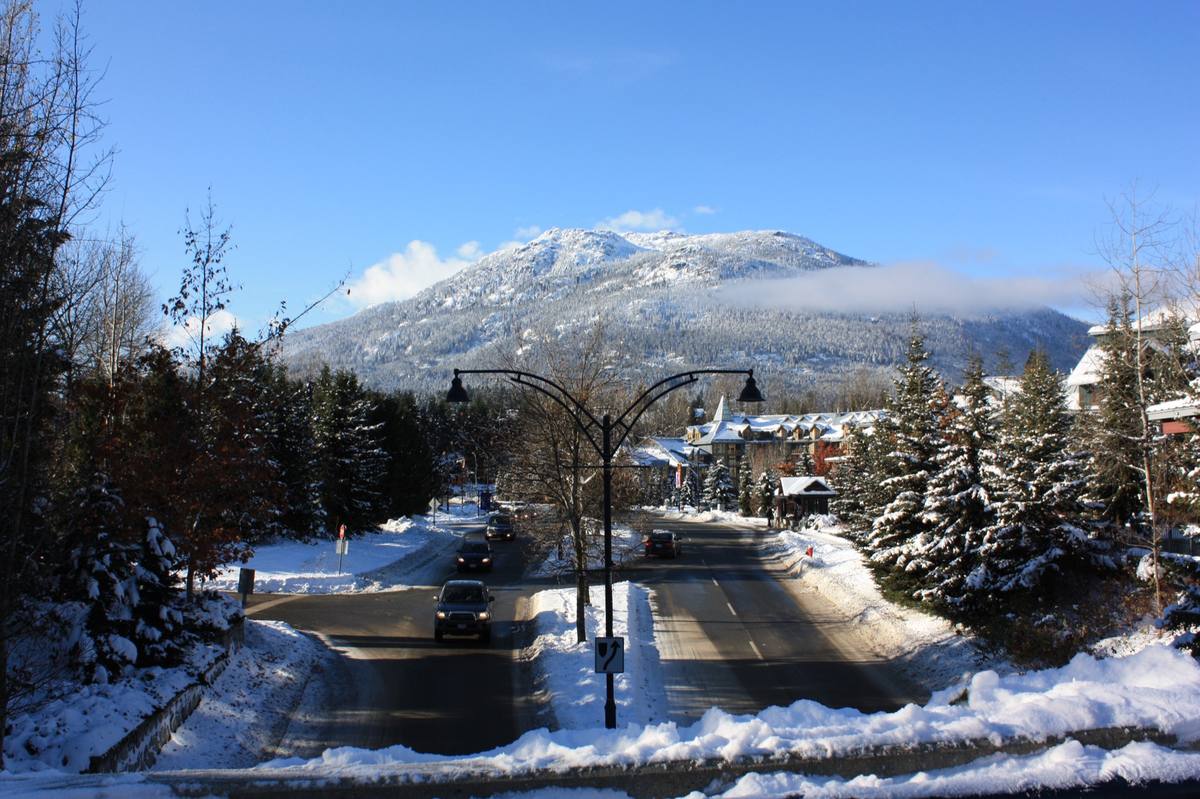
The core trip works without a car, but a car materially expands your lodging, evening or mountain choices. Verified August 20, 2026.
Evenings03:00 — Whistler Transit runs roughly 05:20 to 03:00 daily; the free Route 5 village shuttle ends earlier
At a glance
- Ski areas
- 4
- Within 30 min
- 3
- Closest
- 10 minWalk
- Reachable by transit
- 2 of 4
- Arriving from
- Vancouver International (YVR)3h by public bus
- Groceries on foot
- YesYear-round town
The verdict
Verdict
Come for North America's largest lift-served ski resort. You can reach it on foot. Whistler Blackcomb is two mountains on one ticket. From Whistler Village, walk the pedestrian stroll for five minutes and board a gondola. Add buses from Vancouver airport running all day, a free village shuttle, two supermarkets and a working municipality of roughly fourteen thousand residents, and this is one of the very few destinations here where a car never has to enter the trip.
Do not come for variety. There is exactly one lift-served area, and the only other skiing inside forty minutes is nordic trail networks in the Callaghan Valley that need a car. Do not come for value either: lodging, lift tickets and a village dinner all sit at the top of the North American range. And do not count on winter at your door — the village base is 675 meters, and several times a season it rains there while it snows at the Roundhouse.
Is this base for you?
Who this suits
Best for
- Skiers who want one enormous mountain for a week. Whistler and Blackcomb share a ticket and Peak 2 Peak link, with enough terrain to avoid repacking or choosing day trips.
- Air travelers avoiding a rental car. Buses run from Vancouver airport to the village, where pedestrian streets and a free village shuttle connect beds to both gondolas.
- Mixed groups with non-skiers. The Village Stroll, two supermarkets and late-running transit support a full day and evening without entering a lift line.
Depends on you
- A purpose-built pedestrian village. Almost every central bed is within ten minutes of a gondola and evening activity, but the center was designed from the late 1970s rather than grown.
- A 675-meter base beneath glacier terrain. High lifts preserve a long season, while rain can replace snow at the village door when the freezing level rises.
- Vail-owned Whistler Blackcomb. Epic access suits pass holders planning one flagship resort; everyone else faces top-of-market lift pricing and no comparable second alpine area nearby.
The honest part
Things you should know
- 01
Whistler is the most expensive destination on this site, and it is not close. Window lift tickets at a Vail-owned flagship, February village lodging, and a Village Stroll dinner all price at the top of the North American range, and the paid day lots mean even arriving by car costs money before you reach a lift. Buy the pass in autumn or accept the gate price.
- 02
The village base sits at 675 meters and the freezing level does not respect it. Several times a winter it rains on the Village Stroll while it is snowing at the Roundhouse, 1,100 meters above — and the coastal snowpack is heavy and wet compared with the interior. Bring hard-shell outerwear, not the down jacket that works in Utah.
- 03
Two million-plus annual visits arrive through one road and two valley gondolas. Highway 99 is the only route in from Vancouver, so a crash or an avalanche-control closure between Squamish and Whistler strands the corridor for hours with no alternative. On a Saturday with fresh snow the Whistler Village Gondola line backs into the plaza before the lifts spin.
The access matrix
What you can ski from Whistler
Typical door-to-lift times in normal winter conditions. ● marks areas reachable on published transit during ski hours. Every row is dated below.
- On foot or skis
- Public transport
- Lift from town
- Needs a vehicle
| Ski area | Getting there | Time | Best for | Main drawback |
|---|---|---|---|---|
| Transit-served. Whistler Blackcomb | Walk5–10 min walk from village-core beds · free Route 5 shuttle from Upper Village/BenchlandsEvidence & assumptions for Whistler BlackcombEstimated door-to-lift. Village-core lodging is a 5–10 minute walk to the Whistler Village Gondola or the Blackcomb Gondola; Upper Village and Benchlands beds add the free Route 5 shuttle, and Creekside has its own gondola. Source [1] Whistler Transit System — schedules and route maps — verified August 20, 2026 | [1] | A week on one enormous mountain without moving the car or the bags | Morning gondola lines at Whistler Village and Blackcomb are the resort's defining frustration |
| Transit-served. Lost Lake Nordic Trails | WalkEvidence & assumptions for Lost Lake Nordic TrailsEstimated. The PassivHaus trailhead on Lost Lake Road is roughly 1.2 km on the Valley Trail from the village core. A separate trail ticket from the alpine lift ticket. Verified August 16, 2026 | Nordic skiing you can do before breakfast, plus lit night trails | Low elevation, so the first and last weeks of the season are a day-of check | |
| Whistler Olympic Park | Drive or shuttleScheduled shuttle ended after 2022/23 · now a car or a booked tour packageEvidence & assumptions for Whistler Olympic ParkEstimated drive: about 13 km south on Highway 99, then 8 km up Callaghan Valley Road — Whistler Sport Legacies' own directions page puts the park "about 15 minutes by car from Function Junction" and, as of August 2026, publishes no shuttle, bus or transit option at all. The scheduled Village shuttle stopped after the 2022/23 season; any current shuttle is a booked tour package, not a schedule. Re-check when the winter-season pages return. Source [2] Hours & Directions — Whistler Olympic Park — verified August 20, 2026 | [2] | Serious nordic distance, biathlon and the 2010 Olympic trails | No scheduled public service reaches it — the Callaghan is the one place a car earns its keep |
| Callaghan Country | DriveEvidence & assumptions for Callaghan CountryEstimated drive to the Alexander Falls Touring Centre. Shares the Callaghan Valley Road approach with Whistler Olympic Park but is a separate operator and a separate ticket. Verified August 16, 2026 | Backcountry touring and a hut trip 13 km in to Journeyman Lodge | Car-only, and the lodge itself is a half-day ski beyond the parking lot |
Where to stay
Whistler Village is the default and, for a first visit, the right answer. The core is genuinely car-free: the Village Stroll is a pedestrian street, deliveries happen underneath, and almost every bed in the village is a five-to-ten-minute walk from either the Whistler Village Gondola or the Blackcomb Gondola. That is the whole product. You pay for it in price and in noise — the village is also where every bar, every conference and every school-holiday crowd is.
Upper Village and the Blackcomb Benchlands sit across Fitzsimmons Creek at the Blackcomb base, five minutes from the main village on foot and connected by the free Route 5 shuttle. Quieter, still ski-in for practical purposes, and the better choice if you want to sleep somewhere that is not directly above a nightclub. The tradeoff is a much thinner run of restaurants and an uphill walk home.
Creekside is the original 1966 base, about five kilometers south. It has its own gondola, its own grocery store, its own parking, and a morning lift line a fraction of the village’s. It is the best-value real base in Whistler. What you give up is the village itself: evenings mean the bus or a taxi, and the choice of places to eat is small enough to exhaust in a week.
Function Junction and Cheakamus Crossing are the south end of the valley — light industry, breweries, coffee roasters and the 2010 athletes’ village turned residential neighborhood. Beds are cheaper and the bus runs, but there is no ski access whatsoever and you will commute twice a day. Treat them as a budget or a season-worker option, not a vacation base.
Getting there
This is the strongest car-free arrival on any North American page here. Scheduled buses run the Sea-to-Sky corridor from Vancouver International Airport and downtown Vancouver to Whistler Village all day — YVR Skylynx is the largest operator, with Epic Rides and other shuttle companies covering similar times. Budget about three hours from YVR (the airport service routes via downtown Vancouver) and about two and a half hours from downtown. The village drop is the Whistler Gateway Loop, beside the Visitor Centre and inside the pedestrian core; Skylynx also stops at Creekside on the way through.
Driving from Vancouver is roughly two hours on Highway 99. The road is spectacular and it is also the only one: there is no alternative route and no passenger rail service to Whistler, so a closure between Squamish and Whistler is a closure, not a detour. Winter tires are legally required on Highway 99 in the winter months.
Getting around
Inside the resort, you do not need a vehicle. The village core is pedestrian. BC Transit’s Whistler system runs from roughly 05:20 to 03:00 daily, with extra winter service, and the Upper Village/Benchlands shuttle (Route 5) is free — BC Transit’s one fare-free route, looping from the Gondola Transit Exchange through the Upper Village and Benchlands about every half hour. There is no longer a free Marketplace shuttle: the old Route 4 is gone from the current route set. Paid valley routes run south to Creekside, Cheakamus Crossing and Function Junction and north through Alpine Meadows to Emerald. Evening transit is genuinely good by ski-town standards, which is rare enough to be worth saying plainly.
Where the system stops is the Callaghan Valley. Neither Whistler Olympic Park nor Callaghan Country is on a transit route, and the scheduled Village-to-Olympic-Park shuttle that used to run in the morning stopped after the 2022/23 season. Current access is a car, a taxi, or a booked package that includes a shuttle — none of which is a published schedule you can plan a week around.
That is why this page carries a car need of helpful rather than unnecessary, even though most visitors here will never touch a vehicle. The rubric counts ski areas on published transit, and two of the four in the matrix fail it. If your trip is Whistler Blackcomb and nothing else — as the overwhelming majority of trips are — treat this page as car-free and ignore the label.
Sourcing note: the Whistler Blackcomb row and the service-span claim cite the registered BC Transit Whistler schedules record, re-read against the live schedules in August 2026. The Olympic Park row cites Whistler Sport Legacies’ own directions page, which publishes driving access only. The Lost Lake row is a walk estimate on the Valley Trail — there is no operator schedule to cite for a walk, so it carries the resort-profile fallback for the trail facts.
Who it suits
- Skiers who want one very large mountain for a week. Two peaks, one ticket, and the Peak 2 Peak gondola linking them so you can change mountains at lunch without going back to the valley. Nobody exhausts this place in five days.
- Travelers arriving by air without a car. Fly into YVR, get on a bus, walk to a gondola. There is no other North American resort of this size where that sentence is true.
- Mixed groups with non-skiers. The village supports a day that has nothing to do with skiing, which is not true of most purpose-built bases.
- Late-season skiers. Glacier terrain keeps Whistler running well past the point where most of the continent has shut down.
It suits multi-mountain skiers least. If your idea of a good week is four different areas, this is structurally the wrong destination — there is one, and the matrix is honest about it. It also suits budget travelers badly, and anyone who specifically wants cold, dry snow should be looking at the interior or the Rockies instead.
Living for a season
Whistler runs one of the largest seasonal workforces in North American skiing, and the constraint is entirely housing. The Whistler Housing Authority administers a stock of employee-restricted rentals and a long waitlist; new projects are delivering more homes through 2026 and 2027, but the WHA is explicit that seasonal workers should not expect availability. In practice a season here means employer staff housing or a bed — often literally a bed in a shared room — arranged before you arrive. Turning up in November to look is how people end up commuting from Squamish.
The upside is that this is a real municipality, not a resort with a postal code. Roughly fourteen thousand people live here year-round, there are supermarkets you can walk to, and the Whistler Health Care Centre on Lorimer Road runs a 24-hour emergency department, with higher-acuity cases transferred to Squamish or Vancouver. Non-Canadians need work authorization before taking a seasonal job — for most young seasonal staff that is the International Experience Canada working holiday permit, which has quotas and deadlines that do not bend for ski seasons.
What the town is like
Two entities share the name and they are not the same thing. The Resort Municipality of Whistler was incorporated in 1975 as the first resort municipality in British Columbia; it is an elected local government with a housing authority, a transit system, a library and a valley full of residents. Whistler Blackcomb is a ski business operating on the two mountains above it, owned by Vail Resorts since 2016. Municipal decisions about housing, parking and transit are not resort decisions, and the distinction matters the moment you try to understand why the village works the way it does.
The village itself was designed, not grown — built from the late 1970s on the site of the valley’s former garbage dump, with the pedestrian stroll and the underground servicing planned from the start. It is the most successful piece of ski-resort urbanism in North America and it also feels like it: curated, commercial, and much more international than Canadian. The 2010 Olympics left their own layer — alpine racing at Creekside, the nordic venues in the Callaghan, the sliding center on Blackcomb, and Cheakamus Crossing, which was the athletes’ village and is now a neighborhood.
The working town is at the edges. Function Junction has the mechanics, the breweries and the climbing gym; Nesters has the grocery store locals actually use. Spend a week only on the Village Stroll and you will conclude Whistler is a shopping mall with chairlifts. Spend a season and you will find the other place underneath it — smaller, wetter, more transient, and considerably more interesting.
Not sure?
Choose somewhere else if…
- Banff
You want cold, dry snow and are willing to trade the walk-to-the-lift village for a bus ride. Banff townsite is a real town with three ski areas on scheduled resort shuttles, and the Rockies do not rain on you in January the way the Coast Mountains do.
Full comparison - Salt Lake City
One mountain is not enough. Seven areas inside an hour, several on published UTA ski buses, city-priced lodging and a full-size airport — everything Whistler's single-resort matrix cannot give you, at the cost of a base that is a city rather than a ski village.
- Chamonix
You want a car-free valley with more than one area in it. The Chamonix valley bus and train link Les Houches, Brévent-Flégère, Grands Montets and Le Tour on one pass — real variety on published transit, from a town that existed long before the lifts did.
This base appears in
Sources & data notes
How this page was verified
Section verification
- Access matrixAugust 16, 2026
- Getting thereAugust 16, 2026
- Getting aroundAugust 16, 2026
- Where to stayAugust 16, 2026
Sources
- Whistler Transit System — schedules and route maps — BC Transit · operator schedule, cited not reproduced · retrieved
- Hours & Directions — Whistler Olympic Park — Whistler Sport Legacies · operator page, cited not reproduced · retrieved
- Northeast resort profiles — NESKIS · sibling property; mountain specifications maintained there · retrieved
- Our mountain resorts — Vail Resorts · official corporate page, cited not reproduced · retrieved
Images
- Photo by James Abbott from West Kelowna B.C., Canada, licensed under CC BY-SA 2.0
.jpg)
Page last reviewed August 16, 2026. Transit routes, schedules and fares change between seasons — check the operator before you travel. Mountain specifications for the northeastern US are maintained separately on NESKIS.