Ski towns for a season
Eight bases whose own numbers back a season, not just a week — four where the mountain houses you because you work for it, and four real towns that rent you a bed either way.
At a glance
| Base | Where | Car-free reach | Evenings | Car |
|---|---|---|---|---|
| Whistler, British Columbia | Canada | 2 of 4 areas | Good | |
| Banff & Lake Louise | Canada | 4 of 5 areas | Limited | |
| Queenstown, New Zealand | New Zealand | 3 of 3 areas | Limited | |
| Aspen & the Roaring Fork Valley | United States | 5 of 8 areas | Good | |
| Burlington, Vermont | United States | 0 of 8 areas | Limited | |
| Innsbruck as a Ski Base | Austria | 10 of 10 areas | Limited | |
| Rutland & Killington | United States | 2 of 7 areas | Limited | |
| Andorra | Andorra | 6 of 6 areas | Limited |
A week and a winter ask different questions. A visitor needs a bed near a lift; a season worker needs groceries without a car, a hospital that exists, transit that still runs after the lifts close, and — the line that decides everything else — an honest word on whether a bed is findable at all. Every published page on this site carries that data in a seasonStay block, and reading across them turns up a real split. Some places house you because you work for the mountain: the job comes first, the bed comes with it, and the page does not soften the housing warning that goes with that. Others let you skip the trade entirely, because a real year-round economy underneath the resort — a university, a hospital system, a duty-free retail trade — rents you an apartment whether or not you ever clip into a binding. Eight pages made that case well enough, in their own words, to belong here.
The mountain houses you
Four places where the season and the job are the same decision, and each page names the specific program, agency or rule that turns that into an actual bed.
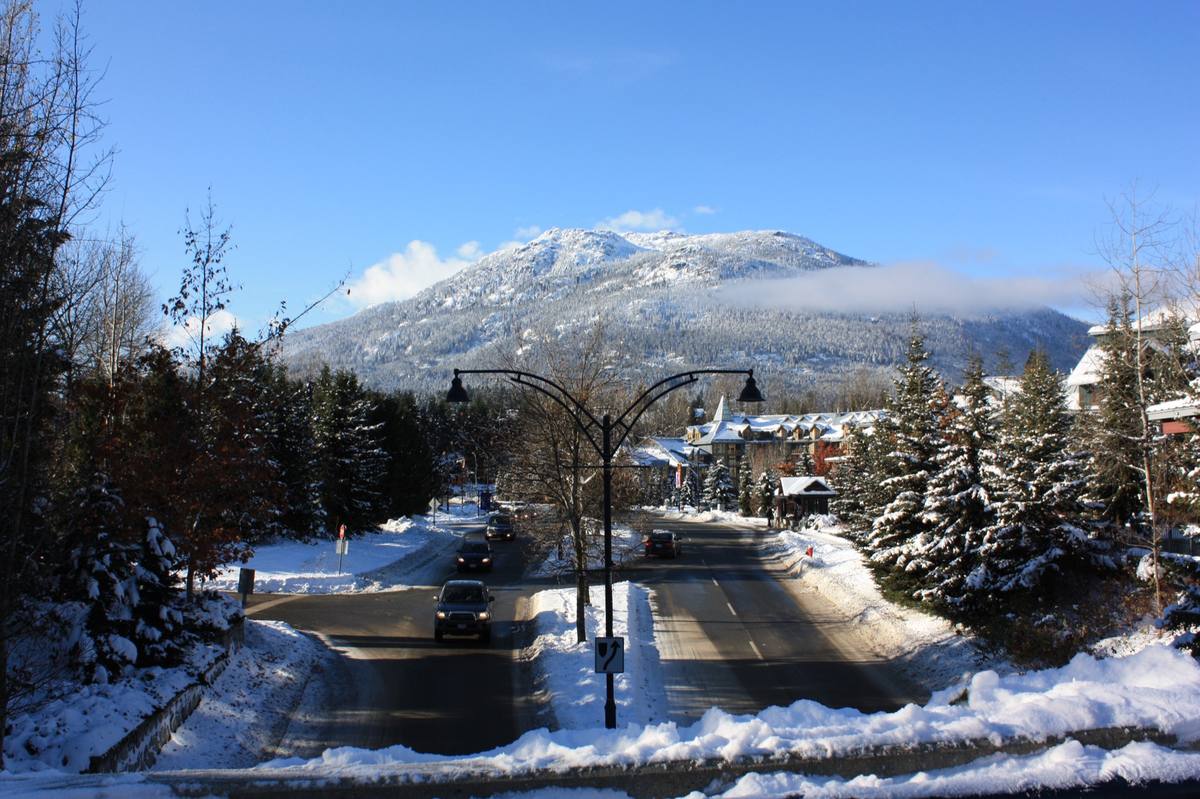
Whistler runs one of the largest seasonal workforces in North American skiing, and its page does not soften the number: housing is rated severe, the Whistler Housing Authority keeps a long waitlist for its employee-restricted rentals, and it is explicit that seasonal workers should not expect availability. The realistic path is employer staff housing or a bed, often literally a shared room, arranged before you land — turn up in November to look and you are the one commuting in from Squamish. What that buys is a real municipality of about fourteen thousand people, with two supermarkets, a 24-hour emergency department, transit that runs to 3 a.m., and, for non-Canadians, a known route in: the International Experience Canada working holiday permit, which the page notes carries quotas and deadlines of its own to clear before the resort job does.
Banff writes the same logic into federal regulation. Under the National Parks Lease and License of Occupation Regulations you must be an eligible resident to live in the townsite at all — in practice, the job has to be inside the park before the address can be — which rules out moving here first and looking for work after. That is exactly why the page rates housing severe: there is no market for investors or second homes, nothing gets built speculatively, and most seasonal workers are in employer staff accommodation with a long queue behind them. The trade is a genuine year-round town of about eight thousand people rather than a camp that empties in April — a hospital, a school, a library, two supermarkets on Banff Avenue, and, again, International Experience Canada as the permit non-Canadians need before any of it is available to them.
Queenstown backs up its severe rating with the least comfortable evidence on this list: reporting through 2026 documents seasonal workers living in vans between jobs, against rental vacancy below one percent and a community housing waitlist past thirteen hundred households. The page’s fix is blunt — line up employer-arranged accommodation before the season starts, since arriving to look for a room afterward is described as a genuine risk rather than a cliché — and the gate in front of that is New Zealand’s bilateral Working Holiday Visa agreements, each with its own age limit and quota, where the visa is usually the tighter constraint, not the job offer. What earns the town its place anyway is a real lake town with a 24-hour hospital in Frankton, small supermarkets within walking distance, and, unusual on this list, actual coworking space for anyone whose season splits between lift tickets and a laptop.
Aspen carries the same severe rating as Whistler and Banff, but its page is the one that names an entire government agency built to solve it: APCHA, the Aspen/Pitkin County Housing Authority, the first workforce-housing agency in Colorado and now the largest of its kind in North America, with roughly 3,200 deed-restricted units covering about 70% of Aspen’s full-time occupied homes. For a single winter the door is APCHA’s seasonal rental program at Marolt Ranch and Burlingame — leases run September to April, shared by up to three qualified employees, utilities included — though Marolt was already full for the coming season when its page was checked, and Aspen Skiing Company houses staff directly on top of that. Miss the lottery and the valley’s own fallback is RFTA: free buses link Aspen and Snowmass, and the VelociRFTA bus-rapid-transit line runs the forty miles to Glenwood Springs — the corridor where the unsubsidized half of the workforce actually lives, in Basalt, Carbondale, Glenwood Springs and Rifle, and commutes in from.
The town houses you
Four places where a real year-round economy, not the resort, rents you the apartment — so the ski season is something you do rather than something you are housed for.
Burlington is the clearest version of the alternative: a university city of about forty-odd thousand people with a college, a state teaching hospital and a real service economy, and its own page rates it the strongest season-work town in the Northeast for exactly that reason. You rent an ordinary apartment — Chittenden County vacancy sat around 3.3% in summer 2026, tight but well off the sub-1% pandemic squeeze, with more than 1,300 rental units opened across 2024 and 2025 — hold an ordinary job, and drive to ski, because Burlington’s own matrix shows zero of its eight mountains reachable by transit. Start hunting in September rather than November; the page is candid that you will be competing with students for the same units.
Innsbruck is the Alpine version of the same idea. Its page states plainly that this is among the few Alpine bases where a winter season doesn’t have to mean staff accommodation, because a city of 130,000 people with a university and a teaching hospital keeps a genuine long-term rental market running underneath the ski economy. The constraint is the ordinary one of any good university city — student demand and short lets have tightened things, and the page’s advice is to start looking in early autumn rather than wait for snow. Non-EU citizens need the appropriate Austrian work permit before any of this is available to them; the page notes plainly that ski-school and lift-company employers do check, and a tourist entry does not substitute.
Rutland makes the same trade in miniature, and its page is the most direct of the eight about why: this is, in its own words, one of the strongest season-stay bases in the East, entirely because of the city fifteen miles from the lifts rather than the resort itself. Rutland Regional Medical Center is the largest community hospital in Vermont, Merchants Row carries a downtown coworking space, and the rental market runs long-term rather than short-term-only — because Killington itself, dominated by short-term rental stock, is effectively out of reach for a seasonal worker on a normal wage. The cost is a twenty-five-to-thirty-minute commute over Mendon each way, in the dark, most days from November to April, and a statewide housing shortage that means starting the search well before November.
Andorra is the one entry picked for its economy rather than any named housing program; its own page names prospective seasonaires directly as part of the audience for a low-tax, duty-free economy that runs on tourism most of the year. Andorra la Vella and Escaldes-Engordany run on banking, retail and a thermal-spa trade that does not fold up in April, a genuinely different shape from a resort town’s single season. Two honest gaps go with it: housing pressure in the ski villages themselves was never independently assessed for this page and is left unrated rather than guessed at, and Andorra sits outside the EU with its own residency and work-authorization system — the page’s advice is to check work authorization with Andorran authorities specifically, for any nationality, before assuming a resort job alone is enough.
Considered and excluded
- Bozeman, Montana — evaluated and set aside. Its page declines to assess housing pressure at all and warns against reading that silence as reassurance, and nothing in its season-stay case ties the city's real assets — Montana State University, the zero-fare bus — to a documented seasonal ski job or an actual path into a lease.
- The other thirty-nine published destinations — out of scope rather than disqualified. These eight were drawn from a working shortlist of pages whose own Living for a season section already made a developed case; the wider catalog was not screened field by field for this guide.