Aspen & the Roaring Fork Valley
Four mountains on one ticket, every one of them on a free bus, in a valley whose transit agency is the reason a seasonal workforce can still live here at all.
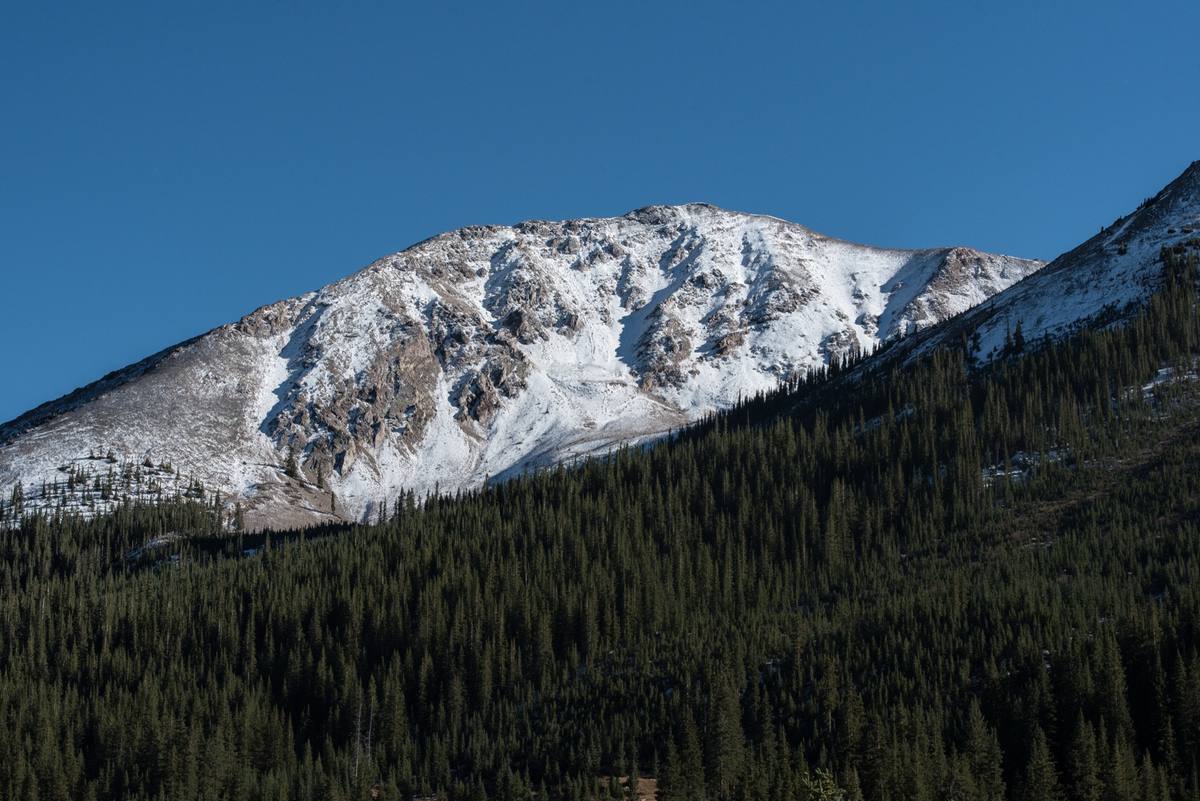
The core trip works without a car, but a car materially expands your lodging, evening or mountain choices. Verified August 20, 2026.
EveningsRubey Park Transit Center in central Aspen operates 6:45 a.m. to 2:05 a.m.; the Hunter Creek, Cemetery Lane and Castle Maroon free city routes run to roughly 2 a.m.
At a glance
- Ski areas
- 8
- Within 30 min
- 4
- Closest
- 10 minWalk
- Reachable by transit
- 5 of 8
- Arriving from
- Aspen/Pitkin County Airport (ASE)15 min by public bus
- Groceries on foot
- YesYear-round town
The verdict
Verdict
Come for four separate mountains on one ticket. A free bus links all of them. Aspen Mountain rises out of the street grid. Highlands and Buttermilk are fifteen minutes west, and Snowmass is half an hour away. The skier shuttles cost nothing and run every fifteen minutes. Add an airport ten minutes from Main Street and a bus rapid transit line down forty miles of valley, and this is the most complete car-free ski system in Colorado.
Do not come if the price is the problem rather than a detail. Aspen is one of the most expensive small towns in the United States and nothing about a week here is cheap, including the parts that are free elsewhere. Do not come to learn to ski, either: Aspen Mountain and Aspen Highlands have no green runs at all, so beginners ride a bus to Buttermilk every morning while everyone else walks to the gondola. Down-valley beds fix the cost and add a commute on the only road in.
Is this base for you?
Who this suits
Best for
- Strong skiers who want a town-center lift. The Silver Queen Gondola rises from Durant Avenue to Aspen Mountain's 11,212-foot summit, and you can ski back into the street grid.
- Visitors determined not to rent a car. Free shuttles from Rubey Park reach Aspen Mountain, Highlands, Buttermilk and Snowmass, while city routes run until roughly 2 a.m.
- Nordic skiers. Ninety kilometers of free groomed trail link Aspen, Snowmass and Basalt, with the Aspen Cross Country Center reachable on the Burlingame/Hwy 82 shuttle.
Depends on you
- Four mountains on one Aspen Snowmass ticket. It is variety without buying another pass if you like changing terrain, and a fragmented resort if you prefer learning one linked domain.
- Snowmass Village. It puts families beside the valley's biggest mountain, but its mall and base are a purpose-built resort rather than Aspen's nineteenth-century town grid.
- The forty-mile valley. Basalt, Carbondale and Glenwood Springs provide working-town alternatives on RFTA, but choosing one turns a central Aspen ski day into an up-valley commute.
The honest part
Things you should know
- 01
The cost is not the usual ski-town markup, it is a different order of magnitude. APCHA counts roughly 3,200 deed-restricted units in Aspen and Pitkin County, and about 70% of Aspen's full-time occupied homes are deed-restricted — which is the clearest available measure of how far the open market has moved beyond anybody who works here. For a visitor it shows up as lodging, dinner and lift prices with no cheap end at all, and the valley's own answer is to sleep in Basalt, El Jebel or Glenwood Springs and ride in.
- 02
Highway 82 is the only road into Aspen for six months of the year. CDOT closes CO 82 over Independence Pass in mid-November — 17 November for the 2025-26 winter — and does not reopen it until around Memorial Day, so freight, commuters and visitors all funnel through the S-curves and the two-lane Castle Creek Bridge at the entrance to town. The up-valley commute from Carbondale and Basalt on a snowy morning is what turns a fifty-minute drive into ninety, and it is precisely why a down-valley bed is cheaper.
- 03
Neither Aspen Mountain nor Aspen Highlands has a single green run; Highlands took the last of its beginner terrain off the trail map in December 2017. A first-timer staying in Aspen therefore rides a bus to Buttermilk or Snowmass every morning while the rest of the group walks to the Silver Queen Gondola. It is the commonest way a mixed-ability group gets caught out here, and it is worth deciding before you book which side of that split you are on.
The access matrix
What you can ski from the Roaring Fork Valley
Typical door-to-lift times in normal winter conditions. ● marks areas reachable on published transit during ski hours. Every row is dated below.
- On foot or skis
- Public transport
- Lift from town
- Needs a vehicle
| Ski area | Getting there | Time | Best for | Main drawback |
|---|---|---|---|---|
| Transit-served. Aspen Mountain | WalkEvidence & assumptions for Aspen MountainEstimated — roughly ten minutes on foot from a central Aspen bed to the Silver Queen Gondola at Durant Avenue, not measured. The gondola runs from the bottom of town to the 11,212 ft summit in one span. Verified August 16, 2026 | Strong intermediates and up who want to ski back into a town, not a parking lot | No green runs at all, so a beginner in the group cannot follow you down anything | |
| Transit-served. Buttermilk | Resort shuttleFree RFTA Four Mountain Connector · ~every 15 min, 8:00–4:30 · winter onlyEvidence & assumptions for ButtermilkEstimated door-to-lift including the walk to Rubey Park and the wait — the drive itself is about ten minutes. RFTA's Four Mountain Connector is free and winter-only; visitor guidance publishes it as roughly every 15 minutes, 8 a.m. to 4:30 p.m., but RFTA's own route page carries no times out of season. Hosts X Games Aspen each January. Source [1] 4 Mountain Connector — ski Aspen/Snowmass bus routes — verified August 20, 2026 | [1] | First-timers, families and anyone learning terrain park | Modest vertical and short runs; a strong skier is finished with it by lunch |
| Transit-served. Aspen Highlands | Resort shuttleFree Highlands Direct from Rubey Park · every 10–15 min at peak · 13 Dec 2025–12 Apr 2026Evidence & assumptions for Aspen HighlandsEstimated door-to-lift. The free Highlands Direct shuttle runs Rubey Park to Aspen Highlands Village via Maroon Creek Road, published by RFTA as 8:15 a.m.–5 p.m., every 10–15 minutes at peak, for 13 Dec 2025 – 12 Apr 2026. No 2026-27 dates were published as of 20 August 2026. Source [2] City of Aspen Transportation — Aspen Highlands Direct — verified August 20, 2026 | [2] | Experts, and Highland Bowl above the top lift | Also carries no beginner terrain, and the Bowl is a bootpack rather than a lift |
| Transit-served. Aspen Cross Country Center | Public busFree Burlingame/Hwy 82 city shuttle to the Aspen Golf Club trailheadEvidence & assumptions for Aspen Cross Country CenterEstimated. The staffed center sits at the Aspen Golf Club at 39551 Highway 82, on the free Burlingame/Hwy 82 city shuttle, and is the main trailhead into the 90 km Aspen Snowmass Nordic Trail System — which is free to use. Published center hours are 12–5 Mon/Thu/Fri and 10–3 Sat/Sun, closed Tuesday and Wednesday. Coordinates are approximate to the golf club. Source [4] City of Aspen Burlingame free shuttle — Rubey Park to Burlingame via Hwy 82 — verified August 20, 2026 | [4] | Free groomed classic and skate skiing on a day you do not want a lift ticket | Valley-floor elevation, so this is the first snow in the matrix to go in a warm spell |
| Transit-served. Snowmass | Public busRFTA Aspen–Snowmass · free with no seasonal limit · ride itself ~25 minEvidence & assumptions for SnowmassEstimated door-to-lift; the ride itself is roughly 25 minutes. RFTA's fare table lists Aspen to/from Snowmass Village as free with no seasonal limit (the Woody Creek leg is free in the winter and summer service periods only), and in winter the free Four Mountain Connector links Snowmass with the other three mountains; the summer posting routes Aspen-bound riders through a change at Brush Creek Park & Ride. Aspen Skiing Company describes Snowmass as larger than its other three mountains combined. Source [3] RFTA fares — zone fares and fare-free travel — verified August 20, 2026 | [3] | Long top-to-bottom runs and ski-in lodging for families | Half an hour from Aspen each way, and the base is a built resort village, not a town |
| Ashcroft Ski Touring | DriveEvidence & assumptions for Ashcroft Ski TouringEstimated by car, about 12 miles up Castle Creek Road; the lodge address is 12500 Castle Creek Road. Operated alongside the Pine Creek Cookhouse under a Forest Service special-use permit. Published trail pass $25 full day, $15 half day. Coordinates are to the Ashcroft townsite. Verified August 16, 2026 | 35 km of groomed trail in a dead-end valley at around 9,500 feet | Paid trail pass and no bus up Castle Creek Road — the first row here that needs a car | |
| Spring Gulch | DriveEvidence & assumptions for Spring GulchEstimated by car. Six to seven miles southwest of Carbondale off Thompson Creek Road, run since 1986 by the Mount Sopris Nordic Council on private ranch land, free and donation-supported, roughly December to March. Verified August 16, 2026 | 28 km of free daily-groomed nordic with Mount Sopris filling the view | An hour down Highway 82 and then a county road, with no transit on any part of it | |
| Sunlight Mountain | DriveDrive from Aspen · Sunlight's Glenwood shuttle runs Fri–Mon only and does not chain from AspenEvidence & assumptions for Sunlight MountainEstimated by car via Highway 82 and County Road 117; 12 miles from Glenwood Springs. Car-free is technically possible — RFTA down-valley to Glenwood, then Sunlight's own town shuttle at $12 return, published as 8 a.m. and 10 a.m. departures from Hotel Glenwood Springs with a single 4:20 p.m. return — but that shuttle runs Friday to Monday only and starts from Glenwood lodging, so it does not chain sensibly from an Aspen bed. Scored not transit-served for that reason. Verified August 16, 2026 | A cheap independent ski day with the Glenwood hot springs afterward | Over an hour each way, and the shuttle that serves it runs Friday to Monday only |
Sourcing note. The transit rows cite RFTA’s own pages, registered and re-read on 20 August 2026: the 4 Mountain Connector and Highlands Direct route pages, the fare table for the free Aspen–Snowmass claim, the Burlingame shuttle page for the Cross Country Center, and RFTA’s posted Rubey Park and late-evening city-route spans for the mobility claims, with CDOT’s Bustang West Line cited for the arrival leg. RFTA had not posted 2026-27 winter schedules at that read, so season dates and clock times above are the 2025-26 postings. Still second-hand: the Aspen Mountain row is a plain walk estimate resting on the resort profile, and the Ashcroft, Spring Gulch and Sunlight rows (including Sunlight’s own shuttle details) and APCHA’s housing figures were read directly on 16 August 2026 but have no first-party records yet.
Where to stay
Aspen itself is the reason most people come and among the most expensive lodging in Colorado. What you buy is a compact grid you can cross on foot in fifteen minutes, a gondola at the bottom of Durant Avenue, a supermarket, a hospital, and Rubey Park in the middle of it — the transit center every free shuttle in the valley runs through. If the trip is short and you can absorb the price, stay here; nothing else in the valley gets you out of the door and onto a lift this quickly.
Snowmass Village is the ski-in, ski-out answer and the family answer. It is twenty-five minutes away on a free bus that runs year-round, and it sits at the base of the biggest of the four mountains. It is also a purpose-built resort base rather than a town: the Snowmass Mall and Base Village are pleasant and entirely constructed, and an evening that is not on that footprint means a bus back into Aspen.
Basalt and El Jebel, eighteen miles down-valley, are where much of the up-valley workforce actually lives. Basalt has a main street on the Fryingpan River, El Jebel has the big-box shopping the rest of the valley drives to, and both sit on VelociRFTA. Prices drop noticeably; the commute is real but predictable.
Carbondale, thirty miles out under Mount Sopris, is the best value-per-character trade in the valley: a working town with an arts scene, a free in-town circulator every fifteen minutes, and Spring Gulch on its doorstep. Forty minutes from Aspen Mountain in good conditions, considerably more in bad.
Glenwood Springs is the cheapest base and the furthest — about an hour to Aspen. It has the hot springs, an Amtrak station, an I-70 interchange, Sunlight twelve miles away, and the lowest lodging rates on this page. It is also where the arithmetic breaks down: two hours of bus a day is a lot to spend to ski Ajax.
Getting there
Aspen/Pitkin County Airport (ASE) is three miles from town on Highway 82, which for a Colorado ski destination is unusual — the standard here is a two-to-four-hour transfer from Denver. RFTA’s own airport page states that bus service is free into Aspen and Snowmass, with fares applying only for stops north past the Brush Creek Intercept Lot, and the stop is signposted from baggage claim. The catch is that ASE sits in a narrow valley at 7,800 feet and cancels in weather; a diverted flight typically lands you in Denver or Grand Junction.
Denver International is the reliable alternative, and in winter it is four hours by road, because CO 82 over Independence Pass is closed: west on I-70 to Glenwood Springs, then south up the valley. Eagle County (EGE) is about seventy minutes away and is often cheaper.
Car-free from Denver works and almost nobody does it: CDOT’s Bustang West Line runs year-round from Denver Union Station to Grand Junction and stops at the West Glenwood Park & Ride, where you transfer to RFTA up the valley. Amtrak’s California Zephyr also calls at Glenwood Springs, once daily each way, at a depot in the middle of town.
Getting around
This is what the valley is actually good at. RFTA — the Roaring Fork Transportation Authority — is the second-largest transit provider in Colorado after Denver’s RTD, and is widely described as the largest rural transit provider in the United States, carrying around five million riders in 2024. That last superlative comes from secondary sources rather than RFTA’s own material; treat it as unverified.
Two things matter for a ski trip. The first is the Four Mountain Connector: free skier shuttles linking Aspen Mountain, Aspen Highlands, Buttermilk and Snowmass, running seven days a week through the winter and centered on Rubey Park. Highlands additionally gets its own direct route, published by RFTA at 8:15 a.m. to 5 p.m., every ten to fifteen minutes at peak. Nothing about skiing four mountains here requires a car, a parking space or a fare.
The second is VelociRFTA, the bus rapid transit line that has run the forty miles between Aspen and Glenwood Springs since September 2013 — the first rural BRT system in the country. RFTA states the bus comes every twelve minutes or less at peak and takes about an hour end to end, which is what the drive takes. Fares apply between zones; travel is free within a zone and between Aspen, Snowmass Village and Woody Creek. Glenwood and Carbondale each have a free in-town circulator.
Evenings work, which is unusual. Rubey Park operates 6:45 a.m. to 2:05 a.m., and the Hunter Creek, Cemetery Lane and Castle Maroon city routes run to roughly 2 a.m.
The rating on this page is nevertheless helpful, not unnecessary, and the matrix is why: every lift-served mountain on the Aspen Snowmass pass is free-shuttle served, but Ashcroft, Spring Gulch and Sunlight are not, and three of the eight rows here need a car.
Who it suits
- Groups of confident skiers. Four mountains, one ticket, no repacking and no driving.
- Anyone who wants a town rather than a base. Aspen is a nineteenth-century silver town with a grid, a courthouse and a bookshop, not a village built around a lift line.
- People who want to arrive without a car. Airport, bus, four mountains, groceries, hospital, late service — very few ski destinations anywhere clear all six.
- Nordic skiers. Ninety kilometers of free groomed trail between Aspen, Snowmass and Basalt, plus Ashcroft and Spring Gulch.
It suits beginners and budget travelers least, for different reasons. Beginners are confined to two of the four mountains. Budget travelers are in the wrong valley.
Living for a season
Aspen should not, arithmetically, have a workforce. That it does is down to APCHA — the Aspen/Pitkin County Housing Authority — established in 1982 as the first workforce housing agency in Colorado and now the largest mountain-resort workforce housing program in North America.
The numbers are the point. APCHA counts roughly 3,200 deed-restricted units across Aspen and Pitkin County, including 2,303 inside the city, and around 70% of Aspen’s full-time occupied homes are deed-restricted — more than two-thirds of the people actually living in Aspen are in price-controlled housing. Just over 1,700 of those units are owner-occupied, bought at deed-restricted prices with capped appreciation on resale; APCHA regulations also govern roughly 1,369 seasonal and full-time rentals. To qualify you must work at least 1,500 hours a year in Pitkin County for a Pitkin County employer and earn 75% of your gross income from that work. Ownership and rentals are both allocated by lottery, and the odds are poor.
For a single winter, the relevant door is APCHA’s seasonal rental program at Marolt Ranch and Burlingame Seasonal Housing. Leases run 1 September to 30 April — the units go to the Aspen Music Festival in summer — the application fee is $35, employment in Pitkin County must be confirmed by mid-December, and apartments are shared by up to three qualified employees with utilities included. Marolt was already listed as sold out for the coming winter when this page was written, which tells you how early to start.
Aspen Skiing Company houses staff directly as well, and the city is building: the Lumberyard project on Highway 82 by the airport business center will add 277 deed-restricted rental apartments, Phase A of 104 units breaking ground in 2026 for completion in 2028.
If you do not get into the system, you live down-valley. Basalt, Carbondale, Glenwood and Rifle are where the unsubsidized half of the workforce sleeps, and the bus they ride at 6 a.m. is why RFTA exists at the scale it does. Aspen Valley Hospital is in town; Valley View in Glenwood Springs covers the lower valley.
What the town is like
Aspen is a real town that got extremely rich, and the two halves are still both visible. The grid was laid out in the 1880s for a silver camp; the Wheeler Opera House, the Hotel Jerome and the courthouse are all original, and the streets run to the base of the mountain rather than around a purpose-built plaza. Then the money arrived, and the retail on Galena and Hyman is now the kind that does not put prices in the window.
The useful thing is that the ordinary town survives underneath. There is a public library, a supermarket, a hospital, a high school and a bus system, and in March the après crowd and the people who plow the streets drink in the same places. It is a town of about 7,000 functioning as a resort of far greater capacity — which is where the tension comes from, and why the housing program is the most consequential thing the local government does.
Down-valley the character changes fast. Basalt is a river town, Carbondale is an arts-and-ranching town under a 12,965-foot mountain, and Glenwood Springs is a working railroad and hot-springs town that has nothing to do with skiing and never has. The forty miles between them are one continuous economy, and the bus running up and down it is the closest thing the valley has to a main street.
Not sure?
Choose somewhere else if…
- Summit County
You want the same structure — several mountains, one base, a free county bus — without the Aspen price. Breckenridge, Keystone, Copper and Arapahoe Basin sit along one valley on the fare-free Summit Stage and are two hours from Denver rather than four. The trade is base elevation above 9,000 feet and towns with much less off-mountain life.
- Vail & the Eagle Valley
You would rather have one very large mountain than four medium ones, and you want it easier to reach. Vail sits directly on I-70 with year-round Bustang service from Denver and a valley bus of its own, and Beaver Creek is twenty minutes away — at prices in Aspen's bracket, and with a base village that is even less of a real town.
- Salt Lake City
The price is the thing stopping you. Salt Lake puts six mountains inside an hour of a metro where you pay city rents and city restaurant prices, and the airport has a light-rail platform inside the terminal. You give up the ski town entirely and commute up a canyon every morning instead.
This base appears in
Sources & data notes
How this page was verified
Section verification
- Access matrixAugust 16, 2026
- Getting thereAugust 16, 2026
- Getting aroundAugust 16, 2026
- Where to stayAugust 16, 2026
- Living for a seasonAugust 16, 2026
Sources
- 4 Mountain Connector — ski Aspen/Snowmass bus routes — Roaring Fork Transportation Authority (RFTA) · operator page, cited not reproduced · retrieved
- City of Aspen Transportation — Aspen Highlands Direct — Roaring Fork Transportation Authority (RFTA), for the City of Aspen · operator schedule, cited not reproduced · retrieved
- RFTA fares — zone fares and fare-free travel — Roaring Fork Transportation Authority (RFTA) · operator page, cited not reproduced · retrieved
- City of Aspen Burlingame free shuttle — Rubey Park to Burlingame via Hwy 82 — Roaring Fork Transportation Authority (RFTA), for the City of Aspen · operator schedule, cited not reproduced · retrieved
- City of Aspen Transportation — free shuttle routes — Roaring Fork Transportation Authority (RFTA), for the City of Aspen · operator page, cited not reproduced · retrieved
- RFTA contact page — Rubey Park Transit Center hours — Roaring Fork Transportation Authority (RFTA) · operator page, cited not reproduced · retrieved
- Bustang West Line — Denver Union Station to Grand Junction — Colorado Department of Transportation · operator schedule, cited not reproduced · retrieved
- Northeast resort profiles — NESKIS · sibling property; mountain specifications maintained there · retrieved
Images
.jpg)
Page last reviewed August 16, 2026. Transit routes, schedules and fares change between seasons — check the operator before you travel. Mountain specifications for the northeastern US are maintained separately on NESKIS.