Ski without a car in North America
Where you can fly in, reach the lifts, and get home after dinner on scheduled service — ranked by the whole chain: arrival, reach, and evenings.
At a glance
| Base | Where | Car-free reach | Evenings | Car |
|---|---|---|---|---|
| Banff & Lake Louise | Canada | 4 of 5 areas | Limited | |
| Vail, Avon & the Eagle Valley | United States | 7 of 8 areas | Good | |
| Salt Lake City as a Ski Base | United States | 7 of 12 areas | Good | |
| Aspen & the Roaring Fork Valley | United States | 5 of 8 areas | Good | |
| Winter Park & Fraser Valley | United States | 1 of 6 areas | Good | |
| Whistler, British Columbia | Canada | 2 of 4 areas | Good | |
| Steamboat Springs, Colorado | United States | 4 of 6 areas | Good | |
| The Northern Catskills: Hunter, Windham & Tannersville | United States | 3 of 5 areas | None | |
| The Upper Valley: Hanover, Lebanon & White River Junction | United States | 0 of 7 areas | Limited | |
| North Conway & Mount Washington Valley | United States | 1 of 10 areas | None |
This list ranks what the destination pages can prove: a scheduled way in, scheduled service to the skiing, and something still running after dinner. The table above is generated from those pages; here is why each base earns its row.
The complete chains
Banff is the strongest case on the continent: three lift-served mountains, each on a free shuttle from a hotel doorstep, a scheduled bus from Calgary’s airport, and Roam transit running late into the evening. Its page rates a car flatly unnecessary — inside a national park, that is the whole design.
Vail & the Eagle Valley chains a free town bus, a fare-free county bus and a free gondola into the most complete car-free ski system in the American Rockies — seven of its eight matrix areas are transit-served.
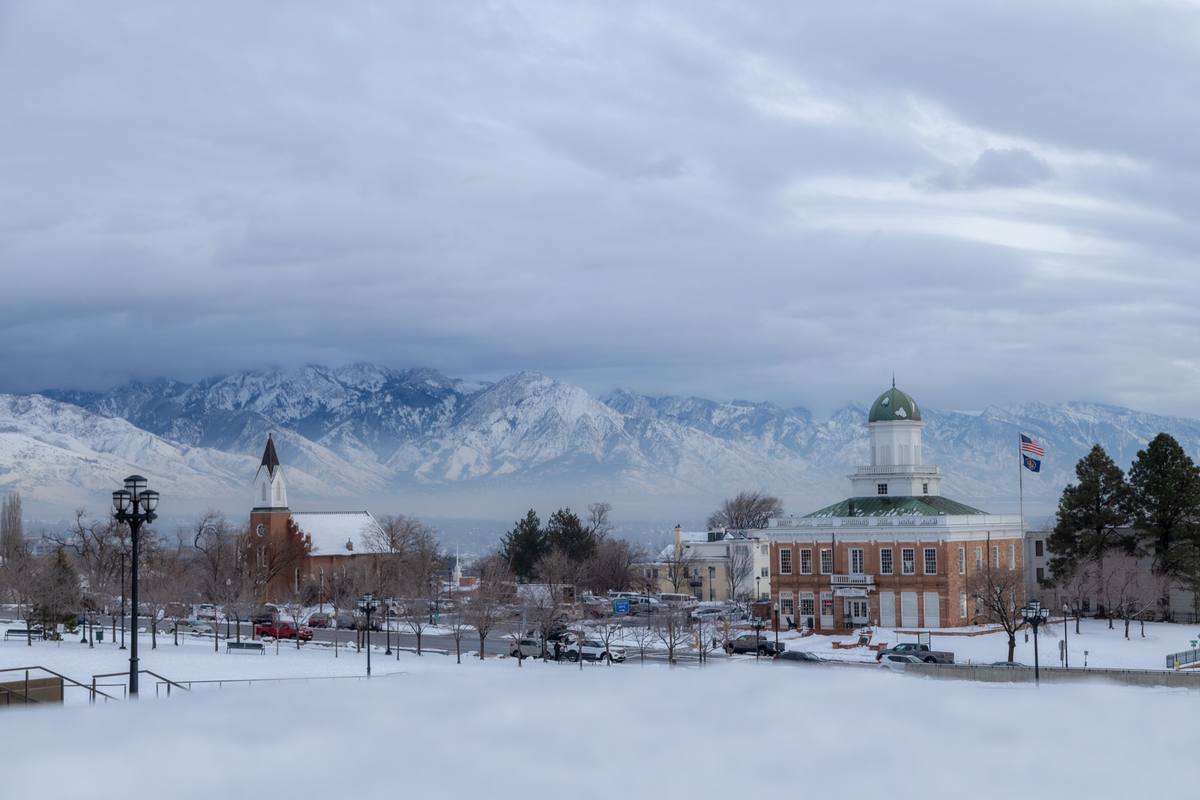
Salt Lake City puts six major mountains within an hour of a city of 1.2 million, with light rail from the airport and ski buses up the canyons. The honest catch its page carries: canyon buses stop shortly after the lifts close, so evenings are for the city, not the mountain.
Aspen & the Roaring Fork Valley runs four mountains on one ticket, every one on a free bus, with valley transit from before 7 a.m. to after 2 a.m. The transit agency is also why a seasonal workforce can still live in the valley at all — the system is real infrastructure, not a resort amenity.
Winter Park & the Fraser Valley has the single best arrival in North American skiing: a scheduled Amtrak train from Denver Union Station that stops at the lift line. It is attached to one mountain rather than many — after dark, the free valley service runs on-call until late.
Whistler parks the continent’s largest resort at the end of a pedestrian street, three scheduled bus hours from Vancouver’s airport, with public transit running to 3 a.m. You will pay village prices for the privilege; the page is clear about that trade.
Steamboat Springs is a ranching town that owns two ski areas, with a night bus looping downtown and the gondola every half hour past midnight. Arrival is its weak link — the regional airport transfer is shuttle-or-car — which is why it sits below the six above.
Car-free from the East Coast
The Northern Catskills are the only Eastern ski cluster you can reach from a major city on a scheduled bus and still sleep in a walkable village. The page leads with the catch: the village and the mountain are not the same place.
The Upper Valley has the best arrival story in the Northeast — daily buses from Boston and New York, an Amtrak platform, a fare-free town bus — attached to modest local skiing. Read it as a base for a certain kind of trip, not a resort substitute.
North Conway earns the last row on arrival and density: a daily bus from Boston and Logan into five mountains within thirty minutes of one walkable village. Once you are there, most of the matrix wants a car — its page does not pretend otherwise.
Considered and excluded
- Burlington, VT — the only real Eastern city that works as a ski base, but zero of its eight matrix areas are transit-served. Its own page says it best: car-free to live, never car-free to ski.
- Stowe–Waterbury, VT — every link of the chain exists (Amtrak, regional bus, free shuttle) but they only connect on weekdays; read the page before building a weekend on it.
- Lake Placid, NY — the free village shuttle has run a reduced schedule since January 2026, ending mid-afternoon.
- Rutland–Killington, VT — Amtrak arrival works, but the last bus back from the mountain leaves before dinner.
- Bethel, Kingfield–Carrabassett, the Mad River Valley, Ludlow, the Berkshires, Littleton–Franconia — no scheduled car-free arrival chain; each page says so plainly.