Nozawa Onsen: One Mountain, Thirteen Free Baths
One mountain and a thousand-year-old onsen village with thirteen free public baths, reached car-free from Tokyo in well under half a day — plus two genuinely scheduled buses a day that reach a second and third mountain, timed here in minutes for what looks like the first time.
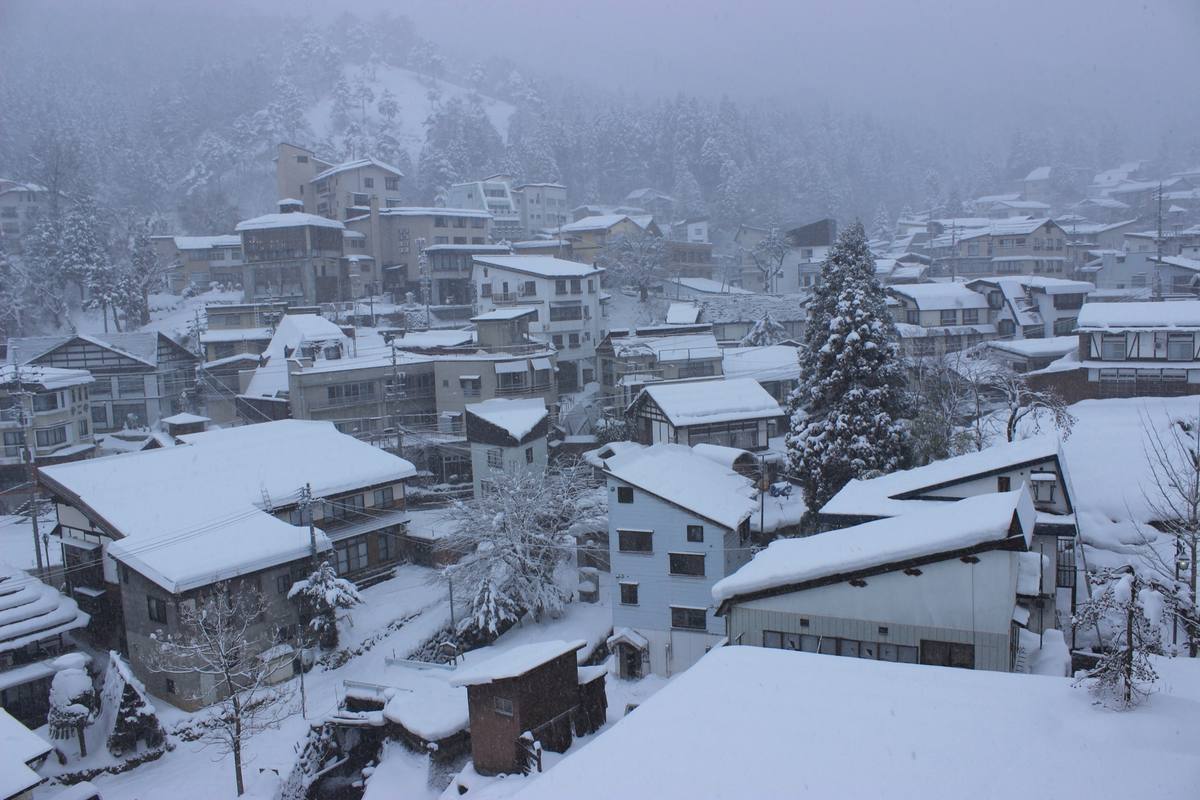
The core trip works without a car, but a car materially expands your lodging, evening or mountain choices. Verified August 18, 2026.
Evenings19:35 outbound from Nozawa Onsen Central Terminal on the Nozawa Onsen Liner, arriving Iiyama 20:05; last inbound arrival 21:45, Dec 13–Mar 29 only
At a glance
- Ski areas
- 3
- Within 30 min
- 2
- Closest
- 10 minWalk
- Reachable by transit
- 3 of 3
- Arriving from
- Tokyo Station2h 5m by train
- Groceries on foot
- YesYear-round town
The verdict
Verdict
Come to Nozawa Onsen for the village, not the mountain count. Thirteen free public baths, run by a community association since the Edo era, sit inside a compact, working settlement you can cross on foot between soaks — a genuinely Japanese onsen town in a way few ski bases anywhere manage. The mountain above it is real and mostly a walk from lodging, and the Hokuriku Shinkansen to Iiyama plus a dedicated 25-minute bus gets you here from Tokyo car-free in well under half a day. What almost nobody else has published: two Nagaden Bus winter expresses, timed here to the minute, that reach Togari Onsen and Madarao Kogen without a rental car.
Do not come expecting those buses to carry the whole trip. Both run twice a day, both operate a ten-week window from December 20 to March 1, and missing the return leaves you waiting until morning. Do not come for a flat village either — the walk from bed to bath and the walk from bed to lift are often not the same one.
Is this base for you?
Who this suits
Best for
- Visitors who want one real mountain and a village worth spending evenings in. Thirteen free public baths and a walkable historic core carry a non-ski afternoon better than any base lodge.
- Travelers who can build a day around a timetable. Togari and Madarao are genuine, verified options — if the two daily departures happen to fit the plan.
- Anyone content without an international resort scene. Nozawa's foreign season-worker community is real but modest, closer to a quiet Nagano onsen town than to Hakuba or Niseko in February.
Depends on you
- One mountain, thoroughly, plus two extras on a short leash. Nozawa's own resort is reachable at will; Togari and Madarao need a car-free visitor to plan around exactly two buses a day.
- A sloped, historic village rather than a flat purpose-built base. That is the whole charm of the place, and also the reason "close to the baths" and "close to the lifts" can be two different addresses.
- A genuinely Japanese onsen town over an internationalized resort scene. Quieter and smaller than Hakuba or Niseko, with a real but modest foreign season-worker community rather than a dominant one.
The honest part
Things you should know
- 01
Togari and Madarao are reachable without a car, but only just. Both run exactly two round trips a day to Nozawa, both operate on a Dec 20–Mar 1 window even though the wider Iiyama-based corridors advertise a longer season, and missing the one return bus means waiting until the next day, not the next departure.
- 02
The village is walkable, not flat. Nozawa Onsen climbs from the old core near Oyu up toward the gondola and ropeway base, so a bed close to a bath and a bed close to a lift are frequently not the same address, and no single village-wide walking time is honest.
- 03
Evening transit stops early. The last bus out of the village toward Iiyama leaves at 19:35, and the last arrival back is 21:45 — later than many ski-town shuttles, but still a hard cutoff for anyone planning a late dinner in Iiyama or a night out beyond the village.
- 04
Beyond the village's own mountain and the two seasonal buses, everything else needs a car. Kijimadaira and Ryuoh Ski Park both run shuttles, but only from Iiyama Station — neither reaches Nozawa Onsen directly, so day-tripping to either without a car means a taxi or a rental, not a transfer.
The access matrix
What you can ski from Nozawa Onsen
Typical door-to-lift times in normal winter conditions. ● marks areas reachable on published transit during ski hours. Every row is dated below.
- On foot or skis
- Public transport
- Lift from town
- Needs a vehicle
| Ski area | Getting there | Time | Best for | Main drawback |
|---|---|---|---|---|
| Transit-served. Nozawa Onsen | Walk5–15 min on foot depending on lodging · the village climbs toward the gondola baseEvidence & assumptions for Nozawa OnsenEstimated 5–15 minutes depending on lodging. The village climbs from the old core near Oyu up to the gondola and ropeway base, so there is no single village-wide figure the way there is in a purpose-built base village. Source [4] Nozawa Onsen Snow Resort — access page (train & bus) — verified August 18, 2026 | [4] | The only ski area reachable on foot — most lodging is a walk to a lift, no bus or car needed | Which onsen you picked determines the walk — Oyu and the old core sit further from the gondola than the lanes climbing toward it |
| Transit-served. Togari Onsen | Public busNagaden/NOTOMA bus · 2 round trips/day reach Nozawa · ¥600 · 25 min out, 36 backEvidence & assumptions for Togari OnsenNagaden Bus Co. "Togari Onsen Ski Resort Line" express, co-sold as NOTOMA Bus. Operator timetable: 25 min Nozawa→Togari, 36 min Togari→Nozawa. Only 2 of the corridor's 5 daily Iiyama–Futatsumiya departures continue on to Nozawa Onsen; the rest turn back at Futatsumiya. Fare ¥600 one-way. Independently cross-checked against togari.jp's posted times, which matched exactly. Source [2] Togari Onsen Ski Resort Line — Nagaden Bus winter express timetable — verified August 18, 2026 | [2] | A second ski area for visitors willing to plan a day around two fixed bus departures instead of a rental car | Only two round trips a day reach Nozawa, on a route that runs Dec 20–Mar 1 even though the wider Iiyama corridor operates into late March |
| Transit-served. Madarao Kogen | Public busNagaden/NOTOMA express · 2 round trips/day · Dec 20–Mar 1 only · ¥1,400Evidence & assumptions for Madarao KogenNagaden Bus Co. Iiyama–Madarao–Tangram winter express, co-sold as NOTOMA Bus. Operator timetable: 65 min Nozawa→Madarao Kogen Hotel, 55 min return. Nagaden's own page headlines Dec 13–Mar 31 for the wider Iiyama corridor, but a footnote restricts the Nozawa Onsen extension specifically to Dec 20, 2025–Mar 1, 2026 — the window this row describes, not the headline dates. Fare ¥1,400 one-way. The 3 daily Iiyama departures that continue on to Tangram Madarao are a different set of runs than the 2 that reach Nozawa. Source [3] Iiyama Station–Madarao–Tangram Line — Nagaden Bus winter express timetable — verified August 18, 2026 | [3] | A committed once-a-day-each-way excursion to a third ski area for visitors who plan around the timetable in advance | Just two round trips a day, a ten-week season, and a terminus at the Kogen Hotel stop — one stop short of Tangram Madarao itself |
Where to stay
Lodging splits along the village’s one real fault line: the old core near Oyu, the largest of the thirteen public baths, versus the lanes climbing toward the gondola and ropeway base. The two are not the same walk. Oyu and the streets around it are the historic heart of Nozawa Onsen — ryokan, minshuku, izakaya, and the closest thing to a main street — but the lifts are a climb away. Higher up, toward the base, a smaller cluster of Western- and Australian-run lodges and share-houses puts you closer to first tracks and further from the baths. Nozawa has drawn a foreign season-worker community for years, smaller than Niseko’s but real, and that shows in who runs these upper-village properties.
There is no wrong half of the village to pick. There is only a five-minute walk to a lift or a five-minute walk to a bath, and rarely both from the same address.
Getting there
The car-free route is the Hokuriku Shinkansen to Iiyama, then a dedicated bus. From Tokyo Station, a Hakutaka service takes roughly 100 minutes — the trap is the faster Kagayaki, which does not stop at Iiyama at all, so booking the wrong train name strands you in Nagano. From Iiyama Station, the Nozawa Onsen Liner (Nozawa Onsen Kotsu Inc.) covers the last leg in a published 25 minutes, ¥600, with 10 round trips a day on the winter timetable, 13 December to 29 March. The transfer at Iiyama is not guaranteed to be quick — the two timetables are not synchronized — so allow at least two hours from Tokyo Station and budget for a wait.
One name trap is worth flagging before booking anything: the JR Iiyama Line stops at a station called Togari–Nozawa Onsen, and despite the name it has no bus connection to the village of Nozawa Onsen. Iiyama Station, one stop further down the line, is the only place the Liner departs from.
From a Tokyo airport, allow three and a half to four and a half hours door to door via rail and bus. A private direct shuttle (Nagano Snow Shuttle) covers the same ground in five to seven hours with no transfers; Uber has newly extended into the local area for 2025–26 too, useful for the last mile rather than the whole trip.
Getting around
The village itself is the strongest part of the car-free case, and the constraint is the hill, not the distance. Nozawa Onsen climbs from the valley floor toward the gondola base, so it rewards walking but punishes assumptions — a bed near Oyu can be fifteen minutes from the lift, not five. Thirteen free public baths, run by a community yu-nakama association dating to the Edo era, line that climb and stay open 06:00–23:00 in winter; walking the bath trail in a yukata is close to the village’s main evening activity.
Two more mountains are reachable without a car, and both are worth stating plainly as thin rather than robust. Togari Onsen is a published 25 minutes out and 36 back on a Nagaden Bus winter express, co-sold as “NOTOMA Bus,” but only two of the corridor’s five daily Iiyama–Futatsumiya departures continue on to Nozawa, and the through-service to the village runs December 20 to March 1 only — about ten weeks, even though the wider Iiyama corridor advertises a longer season. Madarao Kogen, at the Kogen Hotel stop, is a real excursion rather than a casual day trip: 65 minutes out, 55 back, on the same operator’s Iiyama–Madarao–Tangram express, again just twice a day and again December 20 to March 1 only. The bus terminates at Madarao Kogen Hotel, one stop short of Tangram Madarao, which a different set of departures serves. Neither route needs a reservation, but both need a printed timetable and a plan B.
Two nearby mountains were checked and left out of the matrix on purpose. Kijimadaira and Ryuoh Ski Park each run a shuttle, but only from Iiyama Station — neither has a bus that reaches Nozawa Onsen itself, so skiing either without a car means a taxi or a rental from the village, not a transfer.
Evening service is thin rather than absent. The last Liner departure out of the village is 19:35, arriving Iiyama at 20:05; the last inbound arrival is 21:45. Arrive late, leave early — the bus does not run around a dinner reservation.
Who it suits
- Visitors who want one real mountain and a village worth spending evenings in. Thirteen free public baths and a walkable historic core do more for a non-ski afternoon than a base lodge ever will.
- Travelers who can build a day around a timetable. Togari and Madarao are genuine, verified options — if the two daily departures fit the plan.
- Anyone happy without an international resort scene. Nozawa’s foreign season-worker community is real but modest, closer to a quiet Nagano onsen town than to Hakuba or Niseko in February.
It suits skiers chasing terrain variety least. One mountain is the honest deal, and the two bus-served extras are seasonal, twice-daily commitments, not a standing option.
Living for a season
Nozawa Onsen is a legally incorporated village (mura) with its own government, not a seasonal camp that empties out every spring — the yu-nakama bath association alone has run continuously since the Edo era, a fair proxy for how permanent the place is. The regional hospital sits in Iiyama, a short ride away rather than in the village itself, and Iiyama is also the practical fallback for anything the village’s own shops do not carry.
The village has drawn foreign seasonal workers, mostly Australian, for long enough to be a genuine fixture rather than a recent trend — smaller in scale than Niseko’s, but the same visa question applies before the job question does. Lodging stock leans toward ryokan and minshuku that come with meals rather than self-catering units, which changes the season-long math compared with a condo-town base: fewer groceries, more of a relationship with whoever runs the place you are staying.
What the town is like
Nozawa Onsen’s roots reach back to the mid-Kamakura period, and it reads that way in a manner few ski bases anywhere manage. The thirteen soto-yu baths are not a spa amenity bolted onto a resort; they are run by residents, free to use, and stitched into the village’s actual street life — you smell sulfur before you see snow. The 1998 Nagano Olympics staged its biathlon events here, and the legacy sits quietly rather than dominating the place the way the ski jumps dominate Hakuba’s Happo-One.
The geography does the rest of the work. The village climbs rather than sprawling flat like a purpose-built base area, so an evening means walking between a bath, a ryokan dinner and an izakaya rather than shuttling between buildings. It reads closer to a car-free European alpine village than to a North American base lodge — compact, sloped, and built long before anyone skied it.
What it is not is undiscovered. Hakuba and Echigo-Yuzawa both point their own visitors here for exactly this reason — a real Japanese onsen town, not a resort that added onsen water to the brochure.
Not sure?
Choose somewhere else if…
- Hakuba Valley
You want lift-served variety over one deep, quiet village. Hakuba's shuttle reaches eight mountains on one pass; Nozawa gives you one mountain and two thin, seasonal bus options in exchange for a far more Japanese village.
Full comparison - Echigo-Yuzawa
Speed and mountain count from Tokyo matter more than village character. Yuzawa reaches eleven areas from one station in about 75 minutes; Nozawa trades that scale for a historic onsen village and a slower, bus-dependent arrival.
- Niseko
You want a bigger, more international scene and don't mind flying into Sapporo instead of taking the Shinkansen. Niseko trades Nozawa's quiet, walkable village and free public baths for scale, nightlife and a much larger foreign population.
This base appears in
Sources & data notes
How this page was verified
Section verification
- Access matrixAugust 18, 2026
- Getting thereAugust 18, 2026
- Getting aroundAugust 18, 2026
- Where to stayAugust 18, 2026
Sources
- Nozawa Onsen Liner winter timetable (PDF) — Iiyama Station to Nozawa Onsen — Nozawa Onsen Kotsu Inc. (のざわ温泉交通株), hosted by Nozawaonsen Village government · operator timetable, cited not reproduced · retrieved
- Togari Onsen Ski Resort Line — Nagaden Bus winter express timetable — Nagaden Bus Co., Ltd. (長電バス) · operator timetable, cited not reproduced · retrieved
- Iiyama Station–Madarao–Tangram Line — Nagaden Bus winter express timetable — Nagaden Bus Co., Ltd. (長電バス) · operator timetable, cited not reproduced · retrieved
- Nozawa Onsen Snow Resort — access page (train & bus) — NOZAWAONSEN PORTAL (en.nozawaski.com) · resort operator access page, cited not reproduced · retrieved
- The Onsen Trail — Nozawa Onsen's 13 free public baths — NOZAWAONSEN PORTAL (en.nozawaski.com) · resort/village operator page, cited not reproduced · retrieved
- Nozawa Onsen Tourism Association — access page — Nozawa Onsen Tourism Association (野沢温泉観光協会) · tourism association operator page, cited not reproduced · retrieved
- Hokuriku Shinkansen line overview (Tokyo – Nagano – Kanazawa – Tsuruga) — East Japan Railway Company (JR East) · operator timetable, cited not reproduced · retrieved
- Iiyama station timetable — East Japan Railway Company (JR East) · operator timetable, cited not reproduced · retrieved
Images
Page last reviewed August 18, 2026. Transit routes, schedules and fares change between seasons — check the operator before you travel. Mountain specifications for the northeastern US are maintained separately on NESKIS.