Sapporo as a Ski Base
A metro of two million reaches five separate ski areas by subway, train and bus — the only Japanese base that pairs big-city infrastructure with this much lift-served variety, published by mode and minute rather than a drive-time guess.
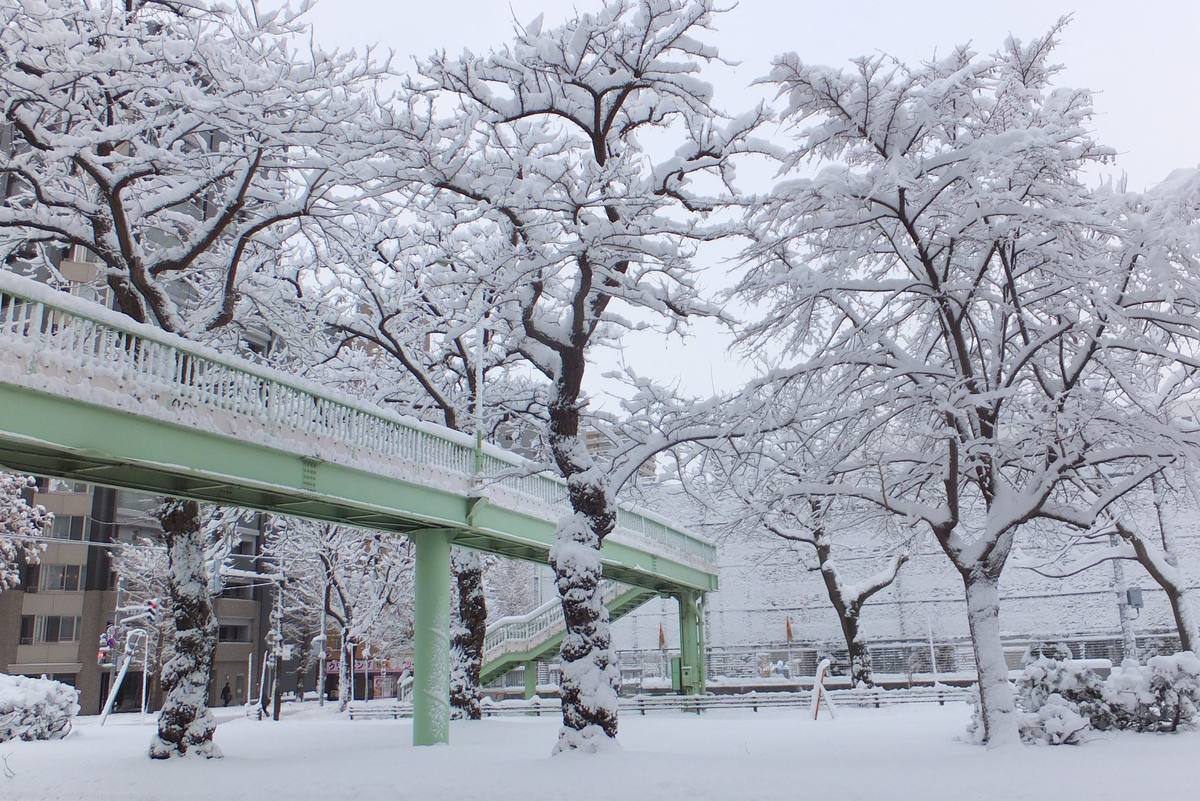
The core trip works without a car, but a car materially expands your lodging, evening or mountain choices. Verified August 18, 2026.
EveningsSapporo subway and JR trains run into the evening on ordinary big-city schedules; among the ski-bound services, only Kokusai publishes a last return departure (17:40 from the ski area, arriving Sapporo roughly 90 minutes later) — Bankei, Teine and Fu's last-return timings were not confirmed this pass
At a glance
- Ski areas
- 5
- Within 30 min
- 2
- Closest
- 23 minTrain
- Reachable by transit
- 4 of 5
- Arriving from
- New Chitose Airport (CTS)37 min by train
- Groceries on foot
- YesYear-round town
The verdict
Verdict
Come to Sapporo to ski several distinct Hokkaido mountains from one city bed, without renting a car. Teine's Olympic downhill and slalom terrain, Kokusai's deep snow, Bankei's in-city hill and Fu's subway-close Olympic luge site are all reachable on published transit from the Odori/Susukino/Sapporo Station triangle, and New Chitose Airport is a 37-minute train ride away. No other Hokkaido base does this at metro scale, and nobody publishes it by mode and minute instead of a drive-time guess.
Do not come expecting Niseko. The powder resort that put Hokkaido on the map is a 3-hour-5-minute bus ride with three morning departures a day — an excursion, not a day trip, and this page treats it as one. Do not expect pure spontaneity either: Kokusai's bus and Kiroro's shuttle both run on fixed, reservation-only windows, so two of the five areas here need a booking rather than a walk to the stop. What you get instead is a real city underneath the skiing — supermarkets, hospitals, restaurants that stay open, and a subway that runs all evening.
Is this base for you?
Who this suits
Best for
- Skiers who want several distinct Hokkaido mountains from one bed — Teine's Olympic-pedigree terrain, Kokusai's deep snow and Bankei's in-city hill are all reachable without a car.
- Anyone who wants a real city around the skiing — supermarkets, hospitals, all-night izakaya and a subway that runs into the evening, not a purpose-built base village.
- Mixed groups with a non-skier, or a longer Hokkaido trip built around a city rather than one resort — the Snow Festival, museums and a full restaurant scene fill the days off snow.
Depends on you
- A big-city base instead of a resort village. You get transit, hospitals and restaurants that run past nine, but no ski-in bed and a subway-plus-bus commute to every mountain in the matrix.
- Two of five areas run on a reservation-only timetable rather than turn-up-and-go service — Kokusai's bus and Kiroro's shuttle both need booking ahead, which suits planners better than the spontaneous.
- Hokkaido without Niseko. This base trades the country's best-known powder resort — a three-hour, thrice-daily bus ride away — for five closer, lesser-known areas and a working city underneath them.
The honest part
Things you should know
- 01
Two of the five matrix rows require an advance reservation on a fixed daily window rather than turn-up-and-go service: Sapporo Kokusai's bus turns away a full coach at the stop, and Kiroro's shuttle runs once a day each way.
- 02
Niseko, the Hokkaido resort most international skiers already know by name, is not a Sapporo day trip — the only direct bus is 3 hours 5 minutes each way with three morning departures a day.
- 03
New Chitose Airport and its rail link have shut down under heavy snow before: a January 2026 storm canceled roughly 500 JR Hokkaido services in a single event and stranded thousands of passengers.
- 04
Bankei's own timetable publishes operating dates but not a departures-per-hour figure, and Fu's Snow Area's bus stop name is inconsistent across every source checked — neither route can be planned to the minute.
- 05
The Sapporo Snow Festival in early February fills hotel inventory across the Odori, Susukino and Sapporo Station triangle that every row in this page's matrix departs from, and prices rise with it.
The access matrix
What you can ski from Sapporo
Typical door-to-lift times in normal winter conditions. ● marks areas reachable on published transit during ski hours. Every row is dated below.
- On foot or skis
- Public transport
- Lift from town
- Needs a vehicle
| Ski area | Getting there | Time | Best for | Main drawback |
|---|---|---|---|---|
| Transit-served. Sapporo Bankei | TrainTozai Line subway + ban.K Bus from Maruyama Kōen · daily, 20 Dec–31 MarEvidence & assumptions for Sapporo BankeiSapporo Municipal Subway Tozai Line from central Sapporo to Maruyama Kōen, then Bankei's own ban.K Bus — a verified 13 minutes from the station, published daily through the 20 Dec 2025 – 31 Mar 2026 season. The subway leg is our estimate at roughly 10 minutes; only the bus segment is on Bankei's own published timetable. Source [1] Sapporo Bankei access — subway and ban.K Bus — verified August 18, 2026 | [1] | A short trip that needs no reservation and no full day set aside | Bankei publishes its ski-season operating dates but not a departures-per-hour figure, so the wait for the connecting bus at Maruyama Kōen can't be planned in advance |
| Transit-served. Fu's Snow Area | TrainSubway to Makomanai + Jotetsu Bus or free shuttle · frequency unpublished · 1 Dec–31 MarEvidence & assumptions for Fu's Snow AreaSapporo Municipal Subway Namboku Line to Makomanai, then a Jotetsu Bus toward the Fujino stop (secondary sources disagree on 3-jo vs. 4-jo, 11-chome) or the facility's own free shuttle. About 30 minutes total — roughly 15 by subway plus 15 by bus or on foot — though the connecting service's own frequency is not published anywhere we found. Open 1 Dec – 31 Mar, snow-dependent. Source [7] Fu's Snow Area — Visit Sapporo official guide — verified August 18, 2026 | [7] | A subway-close half-day between city plans, on the country's other 1972 luge course | The bus stop name is inconsistent across every source we checked — confirm it on the day rather than trusting a printed address |
| Transit-served. Sapporo Teine | TrainJR Hakodate line + JR Hokkaido Bus from Teine Station · no reservation · 13 Dec–29 MarEvidence & assumptions for Sapporo TeineJR Hakodate Main Line from Sapporo Station to JR Teine Station, published as 11–18 minutes depending on service, then JR Hokkaido Bus — confirmed as the operator here, not Jotetsu — from the station's south exit, platform 3. The Olympia course used above is a verified 16 minutes; the Highland course runs 28 minutes for the same ¥1,000 adult / ¥500 child flat fare. No reservation. Season confirmed 13 Dec 2025 – 29 Mar 2026. Source [3] Sapporo Teine access — Japanese-language page — verified August 18, 2026 | [3] | A full-scale mountain inside the city limits, on the 1972 Olympics' own downhill and slalom terrain | The connecting bus takes exact change or a SAPICA/Kitaca transit card only — a foreign credit card or an unbroken banknote will not get you on board |
| Kiroro | Resort shuttleReserved shuttle · one round trip a day, out 8:20am · running days disputed · 13 Dec–5 AprEvidence & assumptions for KiroroReservation-required commercial shuttle (bus 6601 outbound / 6602 return), operated by AIR Co., Ltd. or Dream Kanko Bus Co., Ltd. and sold through Hokkaido Access Network on Kiroro's behalf — not a scheduled public bus line. Exact times: dep. Sapporo Station 8:20am, arr. Kiroro Mountain Center 9:50am; dep. Kiroro Mountain Center 4:30pm, arr. Sapporo Station 6:00pm. One round trip a day, five Sapporo pickup points, season 13 Dec 2025 – 5 Apr 2026. The two operator pages conflict on which days it runs: access-n.jp's own booking page says 毎日運行 ("operates daily") with no restriction, while kiroro.co.jp's own access page says Tuesdays, Thursdays, Saturdays, Sundays and national holidays only (daily 23 Dec–14 Jan). Both are the operators' own live pages — cited here without picking a winner. Source [8] Sapporo ⇆ Kiroro ski bus — timetable (bus 6601/6602) — verified August 18, 2026 | [8] | A full resort day out, for anyone who can commit to the one daily departure | Runs once a day each way by reservation, and the two operator pages that sell it disagree on which days of the week it even runs |
| Transit-served. Sapporo Kokusai | Public busReserved-seat ski bus · 6 round trips a day, out 7:30–10:00am · 21 Nov–6 MayEvidence & assumptions for Sapporo KokusaiRun jointly by Jotetsu Bus and Hokkaido Chuo Bus as 札幌国際スキー場線(予約定員制); Chuo Bus's own course 12403 page is the schedule of record, while Jotetsu's page covers reservation method and fares only and explicitly defers timing to Chuo Bus. Six round trips a day, outbound from Sapporo Station 7:30–10:00am; return departures from the ski area 3:50–5:40pm, arriving back roughly 90 minutes later. 97 minutes is the direct-from-Sapporo-Station outbound time; faster from Makomanai (about 60 min) or Jozankei (about 30 min). Season 21 Nov 2025 – 6 May 2026. Source [5] Sapporo Kokusai Ski Bus course — verified August 18, 2026 | [5] | A committed day trip, for anyone who books the seat ahead | Every seat is reserved in advance and a full coach turns riders away at the stop, so this row does not work as a same-morning powder-day decision |
Where to stay
People stay inside the Odori, Susukino and Sapporo Station triangle, and which corner you pick changes the trip more than the distance between them suggests.
Sapporo Station is the practical default. The JR Rapid Airport train from New Chitose arrives here, all three subway lines meet underneath it, and the Kokusai ski bus departs from the north exit — if the access matrix above is the whole point of the trip, this is the bed to book.
Susukino is the nightlife and food base: izakaya, ramen alleys that peak near ten at night, and the Jingisukan grilled-lamb houses Sapporo is known for. It suits anyone treating skiing as one part of a broader city trip rather than the reason for it.
Odori sits between the two — quieter than Susukino, closer to the park, and the main venue for the February Sapporo Snow Festival. All three are a walk or a couple of subway stops apart, so the real choice is about evenings and mornings, not about which ski area you can reach.
Getting there
New Chitose Airport (CTS) connects to Sapporo Station on the JR Rapid Airport train in a published 37 minutes, with three Rapid, one Special Rapid and two Semi-Rapid departures an hour at midday — turn up and go, no reservation needed for the non-reserved cars. It is one of the more frictionless big-city ski arrivals anywhere: no rental counter, no shuttle bus, a train platform under the terminal.
Treat the winter-reliability caveat as real, not theoretical. A January 2026 storm shut the airport and the rail link down repeatedly, canceling roughly 500 JR Hokkaido services in a single event and stranding thousands of passengers at New Chitose. Build slack into a connecting flight rather than assuming the 37 minutes holds in a storm.
One boundary worth stating plainly: this page does not cover Niseko. Hokkaido’s best-known powder resort is reachable from Sapporo Station by exactly one direct bus, a published 3 hours and 5 minutes each way with three outbound departures a day, all in the morning. That is an excursion you plan around, not a day trip you decide on over breakfast — Niseko is its own destination, and folding it into a Sapporo day-trip matrix would overstate what the timetable actually allows.
Getting around
Sapporo’s own subway (Namboku, Tozai and Tōhō lines) and JR network run into the evening on ordinary big-city schedules — common infrastructure for a metro of two million, not something that needs a special ski-season timetable. Getting around the city itself, day or night, is not the constraint.
Reaching the ski areas is where the matrix above matters, and it splits into two kinds of trip. Bankei, Teine and Fu’s are turn-up-and-go: subway plus a connecting bus, no booking, running on a published daily or seasonal schedule. Kokusai and Kiroro are reservation-only — Kokusai’s coach turns away a full bus at the stop, and Kiroro’s single daily round trip needs a seat booked through Hokkaido Access Network, on an operating-day pattern its own two booking pages don’t even agree on. That split — three areas you can decide on that morning against two that need planning, one of them thinly enough served that this page does not count it as transit at all — is why the honest call here is that a car is helpful, not unnecessary.
Who it suits
- Skiers who want several distinct Hokkaido mountains without a rental car. Teine’s Olympic-pedigree terrain, Kokusai’s deep snow and Bankei’s in-city hill are each a subway-and-bus trip from the same bed.
- Anyone who wants a real city wrapped around the skiing. Supermarkets, hospitals, an all-evening subway and a restaurant scene that runs past nine, not a purpose-built base village.
- Mixed groups and longer Hokkaido trips. A non-skier gets the Snow Festival, museums and Susukino’s food scene instead of a base-lodge afternoon.
- Planners rather than the spontaneous. Kokusai and Kiroro both reward booking a seat ahead of time, and punish showing up without one.
It suits skiers chasing Niseko’s snow specifically least — that resort is a deliberate three-hour excursion from here, not a day trip, and a visitor expecting to bolt over for an afternoon will be disappointed by the timetable.
Living for a season
Sapporo is a normal big city first, not a resort town that happens to have ski areas nearby, and that shows in the practical questions a longer stay raises. Groceries, hospitals and a year-round population of about two million are simply there, the way they are in any Japanese prefectural capital — this page does not need to argue for them the way a purpose-built village does. Unlike Hakuba or Niseko, Sapporo has no significant foreign seasonal-ski-worker economy built around working-holiday visas, so the work-authorization questions that shape a season in those valleys mostly don’t apply here.
The one seasonal pressure worth planning around is the Sapporo Snow Festival, held across Odori, Susukino and the Tsudome site every February (4–11 Feb in 2027). It fills hotel inventory and pushes rates up across the same Odori/Susukino/Sapporo Station triangle every row in this page’s matrix departs from — book that week earlier than you would the rest of the season. We have not verified a long-term rental-market figure for Sapporo this pass, so this page does not carry a housing warning either way.
What the town is like
Sapporo does not perform “ski town” for visitors, and that is the point. It is Japan’s fifth-largest city, laid out on a wide grid after 1869 rather than grown organically like Kyoto or Tokyo, with an underground concourse that lets you cross the core without a coat in a blizzard and a beer-and-ramen culture that has nothing to do with skiing at all. Odori Park runs the width of downtown and anchors the Snow Festival’s giant snow sculptures every February; Susukino next to it is one of Japan’s largest nightlife districts, neon and all.
The mountains are visible but not central — Teine’s slopes are a skyline feature from parts of the city, not something you ski into from a hotel door. That is the trade this whole page is built around: a genuinely major city, with genuinely separate mountains around it, connected by a subway map instead of a lift map.
Not sure?
Choose somewhere else if…
- Hakuba Valley
You want one connected valley on one lift pass with a shuttle reaching every base directly, rather than a subway-and-bus puzzle through a city of two million, and snow pedigree matters more than urban infrastructure.
- Niseko
Hokkaido's deepest, most storied powder and a full international resort scene matter more than saving a commute — Niseko is a real destination in its own right, three hours from Sapporo by the only direct bus.
- Echigo-Yuzawa
You would rather arrive in 75 minutes on a Shinkansen from Tokyo than fly to Hokkaido, and you are willing to trade Sapporo's snow depth and city life for speed and an eleven-area cluster around one station.
This base appears in
Sources & data notes
How this page was verified
Section verification
- Access matrixAugust 18, 2026
- Getting thereAugust 18, 2026
- Getting aroundAugust 18, 2026
- Where to stayAugust 18, 2026
Sources
- Sapporo Bankei access — subway and ban.K Bus — Sapporo Bankei Co., Ltd. · resort operator access page, cited not reproduced · retrieved
- Sapporo Teine access — train, bus and hotel shuttle — Sapporo Teine Ski Resort · resort operator access page, cited not reproduced · retrieved
- Sapporo Teine access — Japanese-language page — Sapporo Teine Ski Resort · resort operator access page, cited not reproduced · retrieved
- JR Hokkaido Bus — Teine terminal page — JR Hokkaido Bus Co., Ltd. · operator timetable, cited not reproduced · retrieved
- Sapporo Kokusai Ski Bus course — Hokkaido Chuo Bus · operator timetable, cited not reproduced · retrieved
- Jotetsu Bus — Sapporo Kokusai ski bus line — Jotetsu Bus Co., Ltd. · operator page, cited not reproduced · retrieved
- Fu's Snow Area — Visit Sapporo official guide — Sapporo Tourist Association (Visit Sapporo) · municipal tourism board page, cited not reproduced · retrieved
- Sapporo ⇆ Kiroro ski bus — timetable (bus 6601/6602) — Hokkaido Access Network Co., Ltd. · operator timetable, cited not reproduced · retrieved
- Kiroro Resort winter access — bus services — Kiroro Resort · resort operator access page, cited not reproduced · retrieved
- Niseko Ski Bus course — New Chitose Airport and Sapporo to Niseko — Hokkaido Chuo Bus · operator timetable, cited not reproduced · retrieved
- Airport Train — New Chitose Airport ⇆ Sapporo ⇆ Otaru — Hokkaido Railway Company (JR Hokkaido) · operator timetable, cited not reproduced · retrieved
- Subway and streetcar route maps and station layouts — Sapporo City Transportation Bureau · municipal transit authority page, cited not reproduced · retrieved
- Sapporo Snow Festival (Yuki Matsuri) — official announcement — Sapporo Snow Festival Executive Committee · event organizer announcement, cited not reproduced · retrieved
Images
- Photo by t-konno, licensed under CC BY-SA 3.0

Page last reviewed August 18, 2026. Transit routes, schedules and fares change between seasons — check the operator before you travel. Mountain specifications for the northeastern US are maintained separately on NESKIS.